Who was John Dorsey Iams?
1920 – 1996
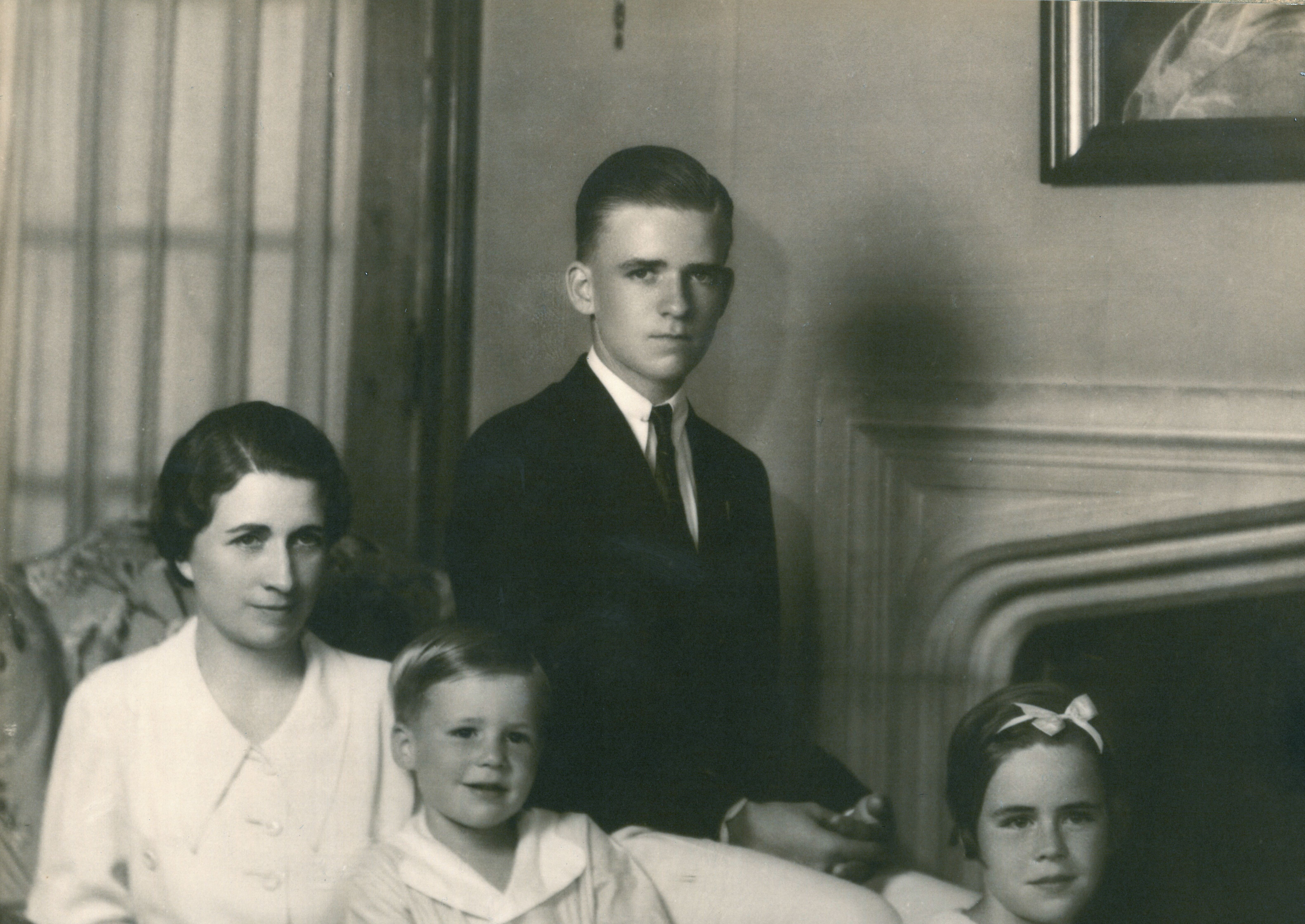
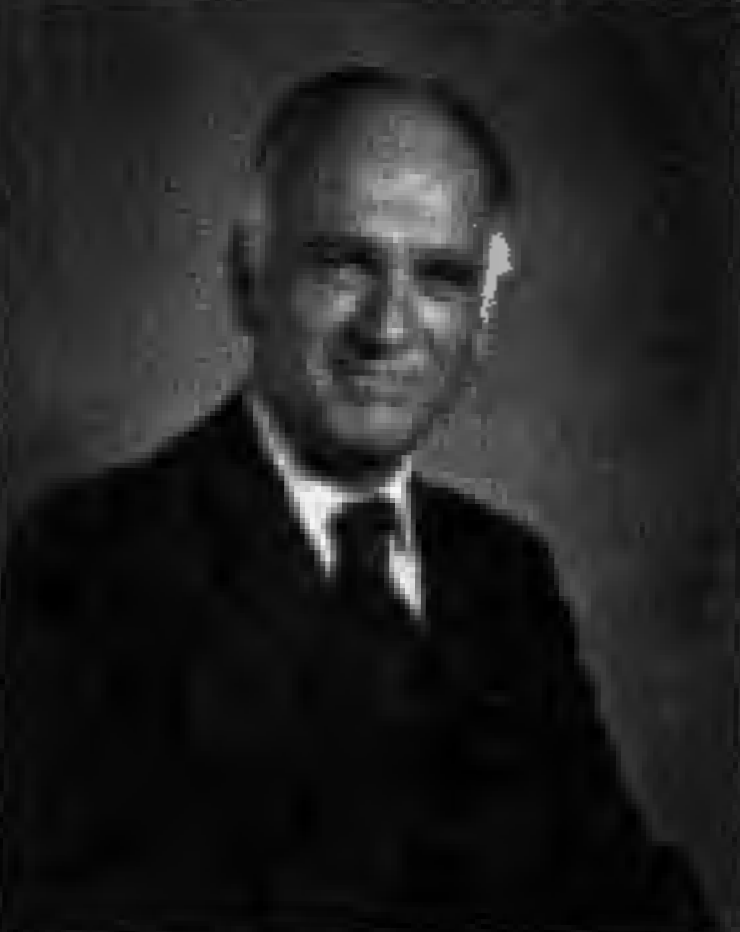
John Dorsey “Jack” Iams (b. 30 December 1920, d. 2 June 1996) is the family member whose adult life is least visible in the surviving record, and whose adult life made the longest journey out of Tulsa. He graduated from MIT in 1942 with a Bachelor of Science in Physics — accelerated for the war — and spent the next half-century in places that did not keep him in family photographs: Camp Murphy on the Florida Treasure Coast for radar training, the Greek civil-war front as a political officer in Athens, Cold-War Prague as a political-economics officer, and a Central Intelligence Agency career that surfaces, when it does, in a memo to DCI John McCone, in the Agency’s own Family Jewels dossier, and in a 487-page Foreign Service Institute study of the Greek Communist Party.
This synthesis was compiled in May 2026 from primary documents in the family collection plus open-source verification. The MIT-and-after material is heavier than the home-front material because that’s what the archives held.
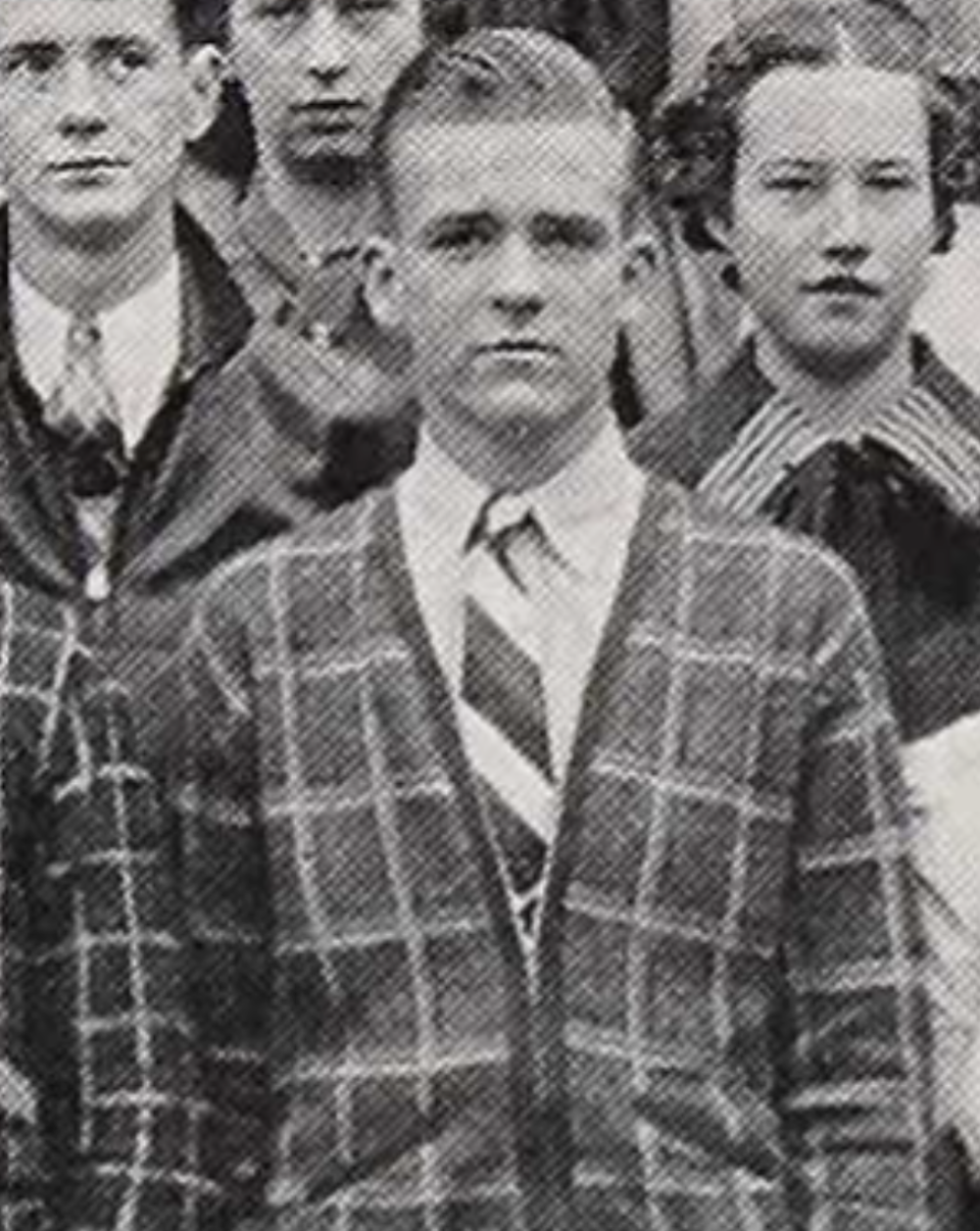
Undergraduate years at MIT, 1938–1942
Iams was a four-year resident undergraduate at the Massachusetts Institute of Technology, graduating in June 1942 with the Bachelor of Science in Physics.1 His senior thesis is dated 10 April 1942 and was submitted to Professor George W. Swett, then Secretary of the Faculty and Professor of Machine Design.23
The MIT Bulletin, Catalogue Issue for June 1941 — issued at the beginning of his senior year — documents the curriculum and faculty as he experienced them.4
Course VIII curriculum (Option 1: General Physics)
Course VIII offered two options, both leading to the BS in Physics. Option 1, General Physics, prepared students for graduate work in pure physics; Option 2, Applied Physics, required summer industrial work. Iams’s July 1941 meteorology assistantship is consistent with Option 1 (which had no required summer placement), and his thesis topic suggests he was steered into the general track precisely so he could take the meteorology / instrumentation summer work as enrichment.5
The published four-year sequence Iams completed:5
Sophomore year (1939–40)
| Term | Course | Title | Units |
|---|---|---|---|
| First | 5.11 | Qualitative Analysis | 7-2 |
| First | 8.03 | Physics | 5-5 |
| First | E21 | Literature and History | 3-5 |
| First | M21 | Calculus | 3-6 |
| First | MS21 | Military Science | 3-0 |
| First | — | Language | 3-5 |
| Second | 2.855 | Machine Tool Laboratory | 2-0 |
| Second | 6.00 | Electrical Eng., Principles | 4-6 |
| Second | 8.04 | Physics | 6-4 |
| Second | E22 | Literature and History | 3-5 |
| Second | M22 | Differential Equations | 3-6 |
| Second | MS22 | Military Science | 3-0 |
| Second | — | Language | 3-5 |
Junior year (1940–41)
| Term | Course | Title | Units |
|---|---|---|---|
| First | 6.11 | Electrical Eng., Principles | 4-6 |
| First | 6.82 | Electrical Eng. Laboratory | 2-3 |
| First | 8.09 | Physical Measurements | 3-2 |
| First | 8.161 | Optics | 3-6 |
| First | 8.162 | Optical Measurements | 3-2 |
| First | 8.511 | Thermodynamics & Statistical Mechanics | 3-4 |
| First | Ec11 | Economic Principles | 3-3 |
| Second | 8.201 | Electronics | 3-5 |
| Second | 8.202 | Electronics Laboratory | 3-2 |
| Second | 8.311 | Atomic Structure | 3-5 |
| Second | 8.312 | Atomic Structure Laboratory | 3-2 |
| Second | Ec12 | Economic Principles | 3-3 |
| Second | M77 | Vector Analysis | 3-6 |
| Second | — | Elective | 6 |
Senior year (1941–42)
| Term | Course | Title | Units |
|---|---|---|---|
| First | 8.11 | Experimental Physics | 8-4 |
| First | 8.461 | Introduction to Theoretical Physics I | 4-8 |
| First | 8.471 | Historical Development of Physics | 3-6 |
| First | — | General Study | 2-2 |
| First | — | Elective and Thesis | 12 |
| Second | 8.12 | Experimental Physics | 2-4 |
| Second | 8.13 | Undergraduate Colloquium | 2-2 |
| Second | 8.462 | Introduction to Theoretical Physics II | 4-8 |
| Second | — | General Study | 2-2 |
| Second | — | Elective and Thesis | 23 |
The course numbering “8.461 / 8.462 Introduction to Theoretical Physics” maps directly to the Slater & Frank textbook of the same title — written by Department Head John C. Slater and Nathaniel H. Frank, both then on the MIT faculty.6
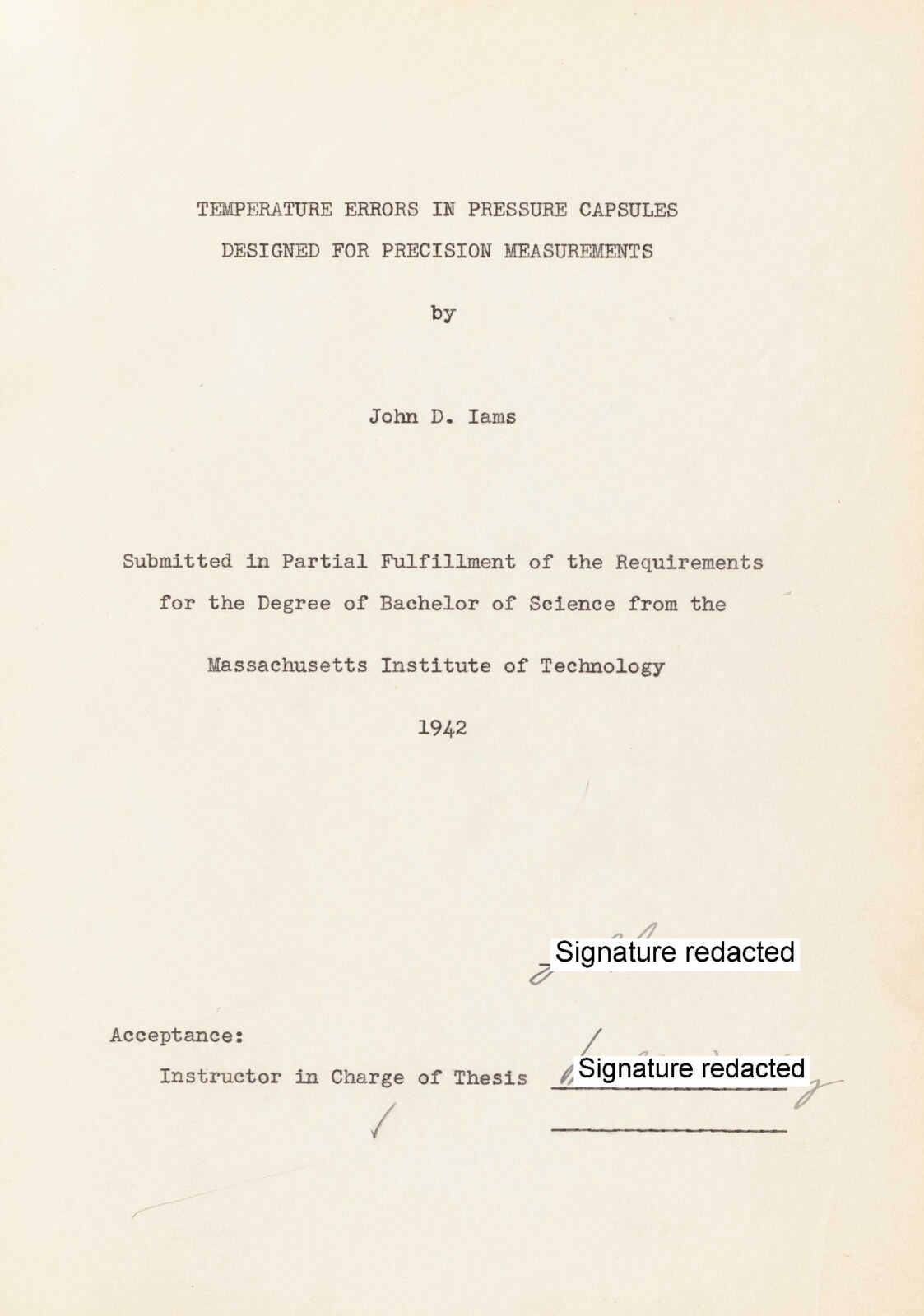
Senior thesis, April 1942
The thesis was submitted on 10 April 1942 to Professor Swett.2 Its acknowledgments thank “Professor Walter McKay and Mr. D. P. Keily of the Aeronautical Engineering Department at M.I.T.”7 It is dedicated to “Mary Grey Ballard, because she never had a dedication.”8
The acknowledgment of D. P. Keily is a direct evidentiary bridge from the summer-1941 meteorology appointment to the senior thesis. Delbar P. Keily appears in the 1941 catalog as Instructor of Meteorology;9 by April 1942 Iams’s thesis identifies Keily as belonging to the Aeronautical Engineering Department, suggesting a cross-departmental appointment driven by the wartime convergence of meteorology and precision aircraft instrumentation. The same Keily who supervised Iams’s summer 1941 assistantship — referred to as “Mr. Keily” in Killian’s correspondence10 — was therefore his thesis advisor or co-advisor a year later.
The thesis’s opening paragraph makes the wartime motivation transparent:
“The temperature compensation of pressure capsules is a problem of fundamental importance in precision instruments designed to be used over a wide range of environmental temperatures and pressures. Instruments such as altimeters, rate-of-climb meters, pressure gages, liquid-gas thermometers and a host of other aeronautics instruments must often supply readings accurate to within one part in five hundred throughout a pressure range of six or seven hundred millibars, and temperatures varying in the space of an hour from plus fifty degrees to minus sixty degrees centigrade. In the aeronautical field, especially, these errors must not only be possible of correction, but the compensation must be intrinsic in the instrument itself, since the pilot, his attention required by other matters, must have the correct readings instantly available without the necessity for the mental exertion of tabular correction.”11
This is wartime aircraft-cockpit instrumentation engineering, not abstract academic physics. The temperature range ("+50 °C to −60 °C in the space of an hour") matches the operating envelope of high-altitude military aircraft — bombers and transport aircraft climbing rapidly through stratified atmosphere. The compensation requirement (“intrinsic in the instrument” so the pilot can read it directly) is military-aviation usability. The cited prior workers — Brombacher, Hersey, Theodorsen, Wildhack, and Goerke — are the NIST/National Bureau of Standards and NACA instrumentation specialists of the period.12
In short: Iams’s “BS in Physics” senior thesis was a piece of operational war-instrumentation work, supervised by a meteorology/aeronautical engineering instructor with whom he had been working since the previous summer.
The MIT faculty he encountered
The June 1941 Bulletin captures the institutional roster at the start of Iams’s senior year.4 Among them are a remarkable concentration of figures who would shape mid-20th-century American physical science, engineering, and policy.
Physics Department (Course VIII)13
The professors-in-residence during Iams’s senior year — many of whom he encountered as direct instructors or examiners:
- John Clarke Slater (1900–1976), Professor in charge of Department — quantum and solid-state physicist of the first rank (Slater determinants, Slater orbitals, Slater rules). His five-volume Quantum Theory of Atomic Structure / Quantum Theory of Molecules and Solids defined graduate solid-state physics for a generation. Slater chaired Course VIII from 1930 to 1966.
- Nathaniel H. Frank, Associate Professor — Slater’s co-author of Introduction to Theoretical Physics (the 8.461/462 textbook) and of Mechanics and Electromagnetism.
- George Russell Harrison, Director of the Research Laboratory of Experimental Physics — spectroscopy pioneer; became Dean of Science in 1942, the year Iams graduated.
- Robley Dunglison Evans (1907–1995) — founder of MIT’s Radioactivity Center, the world’s first authority on radiation biology, who set the radiation safety limits still in use; later author of The Atomic Nucleus (1955). Course 8.311 Atomic Structure (Iams’s junior year) was his department.
- Philip McCord Morse (1903–1985) — author of Methods of Theoretical Physics (with Feshbach); pioneer of US Operations Research; first director of Brookhaven National Laboratory; founding head of the Office of Naval Research physics branch.
- Julius Adams Stratton (1901–1994) — listed here as Professor of Physics; later MIT President 1959–1966. Author of Electromagnetic Theory (1941, the very year of this catalog) — the graduate-level electromagnetism text. By 1942 Stratton was simultaneously serving as Associate Director of the MIT Radiation Laboratory.
- Manuel Sandoval Vallarta (1899–1977) — Mexican-born cosmic-ray theorist; mentor of Linus Pauling at the start of his career.
- Robert Jemison Van de Graaff (1901–1967) — inventor of the Van de Graaff accelerator; ran MIT’s high-voltage laboratory.
- M. Stanley Livingston (1905–1986) — co-inventor of the cyclotron with E. O. Lawrence; later founded the Cambridge Electron Accelerator. Asst. Professor of Physics in 1941.
- Francis Weston Sears (1898–1975) — the Sears of “Sears and Zemansky” University Physics. Taught the 8.03/8.04 lower-division sequence Iams took as a sophomore.
- Arthur C. Hardy, Professor of Optics and Photography — inventor of the recording spectrophotometer; almost certainly taught 8.161/8.162 Optics in Iams’s junior year.
- Wayne B. Nottingham — vacuum-tube and emission-physics specialist; the most likely instructor of 8.201/8.202 Electronics.
Two Physics teaching fellows of 1941 who would become famous in their own right:
- Herbert Goldstein (1922–2005) — listed here as a Teaching Fellow at age ~19, the same year he completed his SB at MIT. Within a decade (1950) he would publish Classical Mechanics, still the worldwide standard graduate text. He and Iams were near-peers.
- David S. Saxon (1920–2005) — Teaching Fellow in 1941 at age 21; later Chancellor of UCLA (1975–1981) and President of the University of California system; sat on the MIT Corporation in later life.
A research fellow in Physics worth noting:
- Isidor Fankuchen, National Research Fellow — pioneer of biological X-ray crystallography.
Mathematics Department14
Iams’s required mathematics sequence (M21 Calculus, M22 Differential Equations, M77 Vector Analysis) was taught by a department containing:
- Norbert Wiener (1894–1964) — founder of cybernetics. By 1941 already a world figure in mathematics; remained a fixture of MIT physics-department circles.
- Dirk J. Struik (1894–2000) — historian of mathematics, author of A Concise History of Mathematics. Marxist scholar; later lived to 106.
- Norman Levinson (1912–1975) — analyst whose ideas later contributed to the elementary proof of the prime number theorem.
- George B. Thomas, Jr. — listed here as an Instructor at age ~26; later author of Thomas’s Calculus, among the most widely used calculus textbooks ever published.
- Francis B. Hildebrand — Instructor at ~26; later author of Advanced Calculus for Applications and Methods of Applied Mathematics, two of the most influential applied-mathematics textbooks of the postwar era.
- Eric Reissner — listed as Instructor; his name attaches to the Reissner plate theory of plate-and-shell mechanics.
- Prescott Durand Crout — Assistant Professor; the Crout matrix decomposition bears his name.
- Frank Lauren Hitchcock — Professor; the Hitchcock transportation problem in linear programming bears his name.
Meteorology Department9
The meteorology faculty Iams worked under during his July–October 1941 summer assistantship:
- Sverre Petterssen (1898–1974), Professor in charge of Department — Norwegian-born; cc’d on the appointment memo. Within weeks of Iams’s summer appointment Petterssen was called by the Norwegian government-in-exile to wartime forecasting in the UK; eventually issued the forecast for the 1942 attack on the German destroyer Tirpitz and served as a senior forecaster for Eisenhower’s D-Day team.
- Bernhard Haurwitz (1905–1986), Associate Professor — one of the giants of dynamic meteorology; later directed NCAR’s Advanced Study Program. His Dynamic Meteorology appeared in 1941.
- Hurd C. Willett (1903–1992), Associate Professor — pioneer of long-range forecasting and of the solar-activity / climate connection.
- Henry G. Houghton, Jr., Assistant Professor — became Department Head 1942–1969; institutionalized MIT’s wartime AAF Cadet Meteorology training program.
- James M. Austin, Assistant Professor — later department head 1969–1971.
- Delbar P. Keily, Instructor — Iams’s direct supervisor in summer 1941;10 later identified in his thesis acknowledgments as Aeronautical Engineering Department.7
- Jerome Namias (1910–1997), Research Associate (Absent in 1941–42) — one of the great American climatologists; later founded long-range forecasting at the Weather Bureau and led the Climate Research Group at Scripps.
- Thomas F. Malone (1917–2013), Research Assistant — later Director of the AMS and editor of the foundational Compendium of Meteorology (1951).
Adjacent departments
- Charles Stark “Doc” Draper (1901–1987), Associate Professor of Aeronautical Engineering — father of inertial navigation; the Apollo Guidance Computer is downstream of his work. Aeronautical Engineering was the home department of Iams’s thesis acknowledgers; Draper was certainly known to Keily and McKay.
- Jerome C. Hunsaker (1886–1984), in charge of Mechanical Engineering — concurrently Chairman of NACA (1941–1956, predecessor agency to NASA). National Aviation Hall of Fame.
- Harold E. Edgerton (1903–1990), Associate Professor of Electrical Engineering — “Papa Flash,” strobe-photography pioneer.
- Maria Telkes (1900–1995), Research Associate, Metallurgy — “The Sun Queen”; pioneer of solar energy conversion (designed the first solar-heated house, Dover House, 1948).
Top of the Institute
- Karl Taylor Compton (1887–1954), President — physicist; signed Iams’s diploma; the office that produced the July 1941 letter.
- Vannevar Bush (1890–1974) — listed on the MIT Corporation. Had left MIT’s VP role in 1939 to direct the NDRC and OSRD; by 1941 he was coordinating all US wartime science.15
- James Rhyne Killian, Jr. (1904–1988), Executive Assistant to the President — author of the July 1941 appointment letters; later Executive Vice President (1943), MIT President (1948–1959), and President Eisenhower’s first Special Assistant for Science and Technology (1957–1959).
- Joseph Chrisman MacKinnon, Registrar — recipient of the July 1941 appointment memorandum.
- Delbert L. Rhind, Bursar — recipient of the July 1941 budget-cancellation letter.
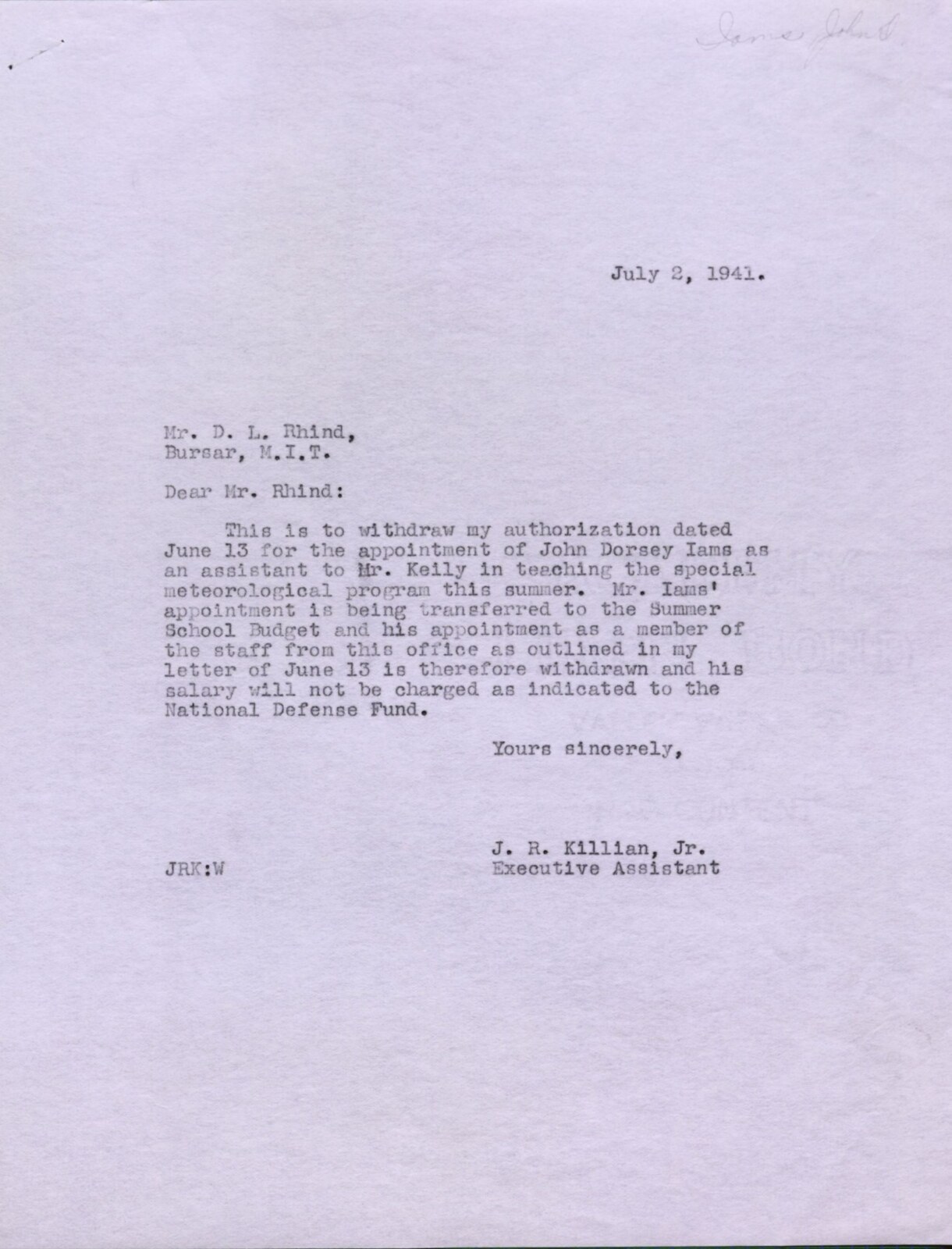
The summer-1941 meteorology assistantship
On 2 July 1941, between Iams’s junior and senior years, James Rhyne Killian, Jr., issued two pieces of administrative correspondence formalizing Iams’s appointment as a teaching assistant in MIT’s “special meteorological program”:
- A letter to Delbert L. Rhind, MIT Bursar, withdrawing the National Defense Fund authorization (transferring the line to the Summer School Budget).
- A memorandum to Joseph C. MacKinnon, MIT Registrar, formalizing the appointment under “your group for the meteorological program for the summer period.” The original appointee, “Mr. Chenery,” had been pulled to a research project; Iams replaced him. The appointment ran 1 July – 11 October 1941 at $125 per month, with cc to Sverre Petterssen (Meteorology Department head, weeks before he left for wartime UK forecasting), Mr. Keily (the program instructor), and Bursar Rhind.10
The “special meteorological program” of summer 1941 was MIT’s second AAF aviation cadet class in meteorology — the wartime training pipeline that, by 1944, would train 994 military officers at the graduate level at MIT alone, and that overall produced 7,000–10,000 weather officers for the war.16
That Iams was placed as an assistant in the wartime cadet meteorology pipeline at age ~20 — six months before Pearl Harbor — and that he then carried his thesis work under the same instructor (Keily) into an aircraft-instrumentation topic, establishes his summer 1941 → June 1942 trajectory as a single continuous engagement with wartime aeronautical preparedness.
Wartime service, 1942–1945
Camp Murphy, Florida — Signal Corps radar training, 1943
The Palm Beach Post of 27 April 1943 announced Iams’s marriage to a woman of the Lemmon family in West Palm Beach, recording his residence as Camp Murphy.17
Camp Murphy was the US Army Signal Corps’ Southern Signal Corps School — a 11,364-acre top-secret radar training installation between Stuart and Jupiter, Martin County, Florida (now Jonathan Dickinson State Park), established in 1942 and named for Col. William Herbert Murphy, a pioneer in radio beams and aircraft equipment. The camp housed 854 officers and 5,752 enlisted men at peak capacity, with nearly 1,000 buildings including a bank, theater, church, and bowling alley. Pilots from NAAS Witham at Stuart flew training missions to provide “targets” for the radar students. SCR-268, SCR-270, SCR-271, and SCR-584 radar sets were taught there. Camp Murphy was officially decommissioned in 1944.18
That Iams was at Camp Murphy in April 1943 is not coincidental. The combination of his MIT physics degree, his thesis on aeronautical precision instrumentation, MIT’s deep institutional involvement in radar through the Rad Lab, and the Signal Corps’ urgent demand for radar officers all converge to make Camp Murphy the natural assignment for an MIT ‘42 physics graduate.
The family understanding — that John D. Iams was an expert in radio technology during his CIA career — is fully consistent with the Camp Murphy origin. The CIA’s technical-operations directorate drew heavily on Signal Corps officers with wartime radar/radio training; Iams’s MIT-physics-to-radar pipeline is a textbook case of that recruitment pattern.
Discharge and the German artifacts, October 1945
The Christian Science Monitor of 8 October 1945 reported a Boston car break-in suffered by Lieut. John D. Iams, “recently discharged from the Army and now a graduate student at Massachusetts Institute of Technology.” The stolen items were valued at approximately $4,500 (~$80,000 in 2026 dollars) and comprised:19
- Cameras
- Lenses
- Drawing sets
- Compass sets
- A navigation watch
- A small box of lockets, rings, and other jewelry, “all made in Germany and which Lieut. Iams had brought back with him”
The explicit attribution that the jewelry was German-made and “which Lieut. Iams had brought back with him” places Iams in occupied Germany at the close of the war. The mix of stolen items is technically suggestive: cameras and lenses for photo-reconnaissance or photo-documentation; drawing sets, compass sets, and navigation watches for technical-survey work. The combination is consistent with a Signal Corps technical officer doing post-surrender equipment recovery, technical intelligence (T-Force-style), or signals-survey operations — though more specific identification will require his Army service record.
Postwar graduate study at MIT, 1945–1947
The same October 1945 newspaper item identifies Iams immediately on discharge as a graduate student at MIT.19
By June 1947 his affiliation had shifted from Physics to the International Relations Division of the Department of Economics and Social Science. He is credited in Norman J. Padelford, ed., International Relations: A Selection of Current Readings (MIT Publications in International Affairs, Number II) for having “directed the drafting of two maps which are included as a general interest feature.”20
Norman Judson Padelford (1903–1982) joined MIT in 1944 to inaugurate international relations as a teaching field. Before MIT he had served on the team that drafted the United Nations Charter at the 1944 Dumbarton Oaks Conference and as Executive Officer drafting the statute of the International Court of Justice at the 1945 San Francisco Conference. He chaired MIT’s political science section within the Department of Economics and Social Science and was instrumental in the eventual creation of MIT’s Department of Political Science. He served on the board of editors of the journal International Organization from its 1947 founding until 1968.21
The family hypothesis: Iams’s MIT graduate paper was classified after he wrote it, and this was the pivot into his CIA career.
This hypothesis is supported by the documentary record:
- Padelford’s MIT International Relations Division was, in 1947, the seedbed of the postwar US international-affairs policy community. The Division produced exactly the kind of analytic work (especially on the early-Cold-War Balkans and Eastern Europe) that would have been classified upon completion.
- No MIT graduate thesis by Iams has surfaced in MIT’s online thesis catalog. This is consistent with the thesis having been removed from public deposit (the standard handling of classified academic work).
- The map-drafting role for Padelford suggests Iams’s particular technical contribution was cartographic / geographic analytical work — exactly the skills that would be redirected to a regional-intelligence assignment.
- His later 1963 Foreign Service Institute term paper on Greek communism (see below) draws explicitly on US Military Mission to Greece archives, suggesting he had been positioned in Greek-affairs work for some time by then.
A secondary hypothesis — that his MIT graduate paper became the basis of the 1963 Rebellion paper — is also plausible. The 1963 paper combines published Greek-Communist-Party sources with US Military Mission to Greece archives, and Iams is described as “a U.S. Foreign Service Officer with experience in Greece”; an underlying analytical framework developed at MIT in 1946–47 (when the Greek civil war was the headline foreign-policy crisis in Washington) and subsequently retained in operational files would naturally be reused in a 1963 senior-seminar paper. Verification would require comparing the 1963 paper’s footnote apparatus to any surviving 1947-era MIT working papers.
Foreign Service and CIA career
Subsequent documents in the family collection trace Iams’s career arc:
- 1956–1957 — US State Department service (passport photographs in the collection).
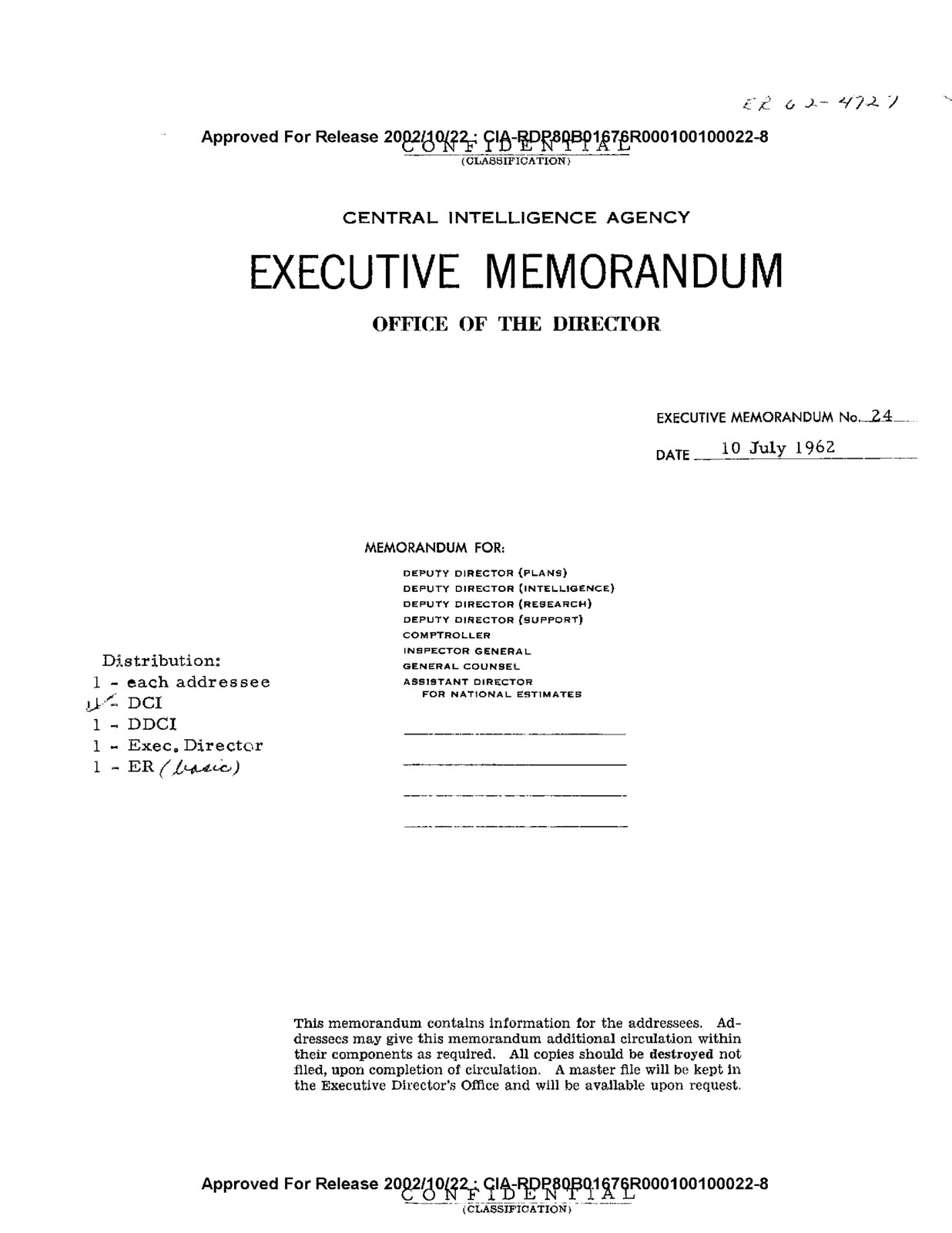
- 10 July 1962 — Memorandum to CIA Director John A. McCone.22
- 4 February 1964 — CIA correspondence concerning Mrs. Kennedy’s letter to Czechoslovakia; documented at page 9 of the “Family Jewels” report.23
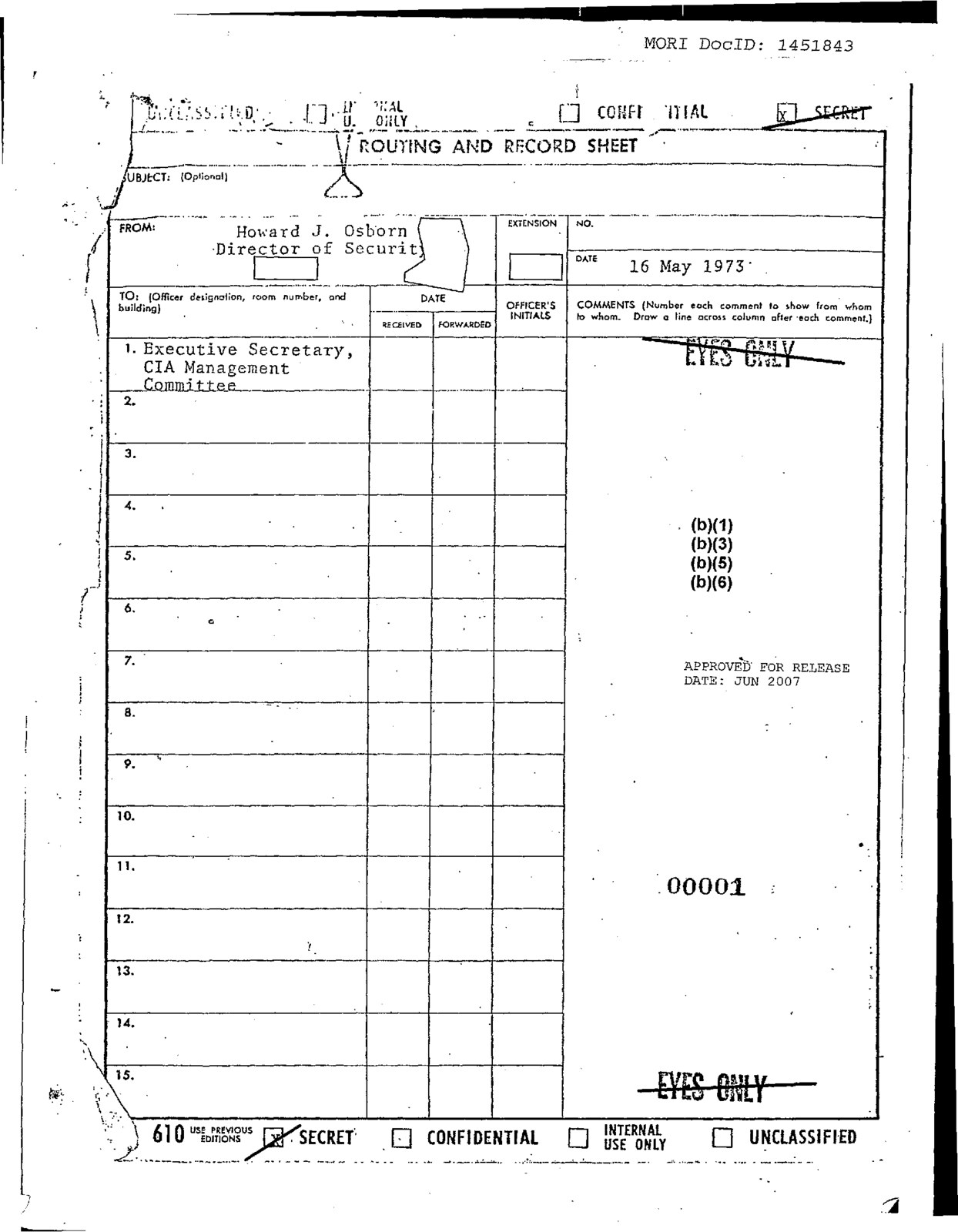
- 16 May 1973 — Referenced in the CIA “Family Jewels” report (declassified 2007).24
- 1963 — Co-authored, with Col. William C. Chamberlin (USMC), Rebellion: The Rise and Fall of the Greek Communist Party — a 487-page Fifth Senior Seminar in Foreign Policy term paper at the Foreign Service Institute, Department of State; declassified 17 September 1999.25 Iams is identified in the abstract as “a U.S. Foreign Service Officer with experience in Greece”; Chamberlin was concurrently assigned to the Joint Chiefs of Staff. The study draws on Greek Communist Party publications and on the archives of the United States Military Mission to Greece, covering the 1946–49 Greek insurgency, the role of US economic and military aid, and the assistance provided to the insurgents by neighboring communist states.
The reconstructed arc:
MIT Physics undergraduate (1938–42) → aircraft-instrumentation thesis (1942) → US Army Signal Corps radar training at Camp Murphy (1943) → wartime service ending in occupied Germany → discharged Lieutenant (1945) → MIT graduate student in International Relations under Padelford (1945–47) → US Foreign Service Officer with Greek-affairs portfolio → CIA technical/operational role → Foreign Service Institute Fifth Senior Seminar (1963).
Research avenues to pursue
- Identify the senior thesis advisor. The “Instructor in Charge of Thesis” signature is redacted in the digital reproduction. The acknowledgments name Professor Walter McKay and Mr. D. P. Keily of the Aeronautical Engineering Department. Walter McKay is the likely advisor; verify his title and affiliation in the MIT Bulletin directory of officers for 1941–42 (Aeronautical Engineering faculty listing). An unredacted thesis title page from MIT Distinctive Collections would settle this directly.
- Locate the MIT graduate thesis (1945–47). The October 1945 newspaper article and the 1947 Padelford reader together establish Iams as an MIT graduate student during this window. The thesis has not yet been located. Request the catalog record from MIT Distinctive Collections; if absent, consider FOIA requests to State and CIA for any classified MIT-period work product.
- Camp Murphy class rosters and Signal Corps records. The National Archives at College Park holds Record Group 111 (Records of the Office of the Chief Signal Officer), including records of the Southern Signal Corps School. A class roster from spring 1943 would establish exactly which radar system Iams trained on (most likely SCR-584 if he was an officer-track student in 1943, since that was the new fire-control radar then entering deployment).
- Army officer service record (NPRC). Submit a Standard Form 180 to the National Personnel Records Center, St. Louis. Although the 1973 fire destroyed many WWII Army personnel records, Signal Corps officer files were partially preserved. The file should show his entire wartime path, including the German posting suggested by the October 1945 newspaper item.
- CIA records (FOIA and CREST). Iams’s 1962 memorandum to DCI McCone and his identification in the Family Jewels suggest a substantive operational file. Search the CIA CREST collection at the National Archives and submit FOIA requests for any non-CREST holdings beyond items already in the family collection.
- State Department Biographic Register and Foreign Service List. Cross-reference the existing Biographic Register entry with the annual Foreign Service List and Department of State Telephone Directory to reconstruct his posting history. The 1963 paper attribution names Greece; Athens-posting dates would establish the temporal frame.
- The dedication to “Mary Grey Ballard.” “To Mary Grey Ballard, because she never had a dedication” is a clue worth following. The phrasing (“never had a dedication”) suggests Ballard had completed her own thesis without dedicating it. Possibilities: a Radcliffe or Wellesley contemporary, a family member, or a high-school mentor. Check Radcliffe / Wellesley / Bryn Mawr senior-thesis records 1938–42 for “Mary Grey Ballard” or “Mary G. Ballard.”
- The bride’s first name and family. The April 1943 Palm Beach Post clipping documents the marriage; the bride’s surname is Lemmon. Pursuing Lemmon family records from Palm Beach County may shed light on the Camp Murphy social context and may surface courtship correspondence from spring 1943.
- MIT Class of 1942. Technique — the MIT yearbook for 1942 — lists every graduating senior with home town, activities, and post-graduation plans. Reading Iams’s own entry plus those of his Course VIII classmates would identify peers who shared his trajectory into wartime physics / radar work.
- MIT alumni biographical files. MIT Distinctive Collections maintains biographical files for individual alumni. Iams’s file, if it exists, would consolidate the institutional record.
- The 8.13 Undergraduate Colloquium, spring 1942. This was a required senior seminar with visiting speakers. Spring 1942 was peak Rad Lab activity; the colloquium roster would identify who Iams heard lecture in his last semester at MIT.
- MIT Aero Engineering 1941–42 records. If Iams was assisting Keily in Aeronautical Engineering between summer 1941 and April 1942, the MIT Aero Engineering Department’s records may capture this. Check MIT ArchivesSpace for Aero/Astro collection holdings of the era.
- Padelford papers at MIT. Norman Judson Padelford papers are at MIT ArchivesSpace as Resource 972. Editorial correspondence for International Relations: A Selection of Current Readings (June 1947) — the volume Iams contributed to — should reveal the map-drafting work and the broader research project Iams was attached to.
- The 1945 Boston theft items. The $4,500 (1945 dollars) valuation and the specific list of items — cameras, lenses, drawing sets, compass sets, navigation watch, German-made jewelry — should be researchable in Boston Police records (Boston Public Library archives), with possible follow-up coverage in the Christian Science Monitor or Boston Globe in the weeks after 8 October 1945.
- MIT International Relations Division working papers, 1945–47. The maps Iams drafted for the 1947 reader should be physical artifacts. The MIT Publications in International Affairs series may have predecessor working papers or technical reports archived at MIT.
- Greek-language and Greek-archive sources. For the period Iams served in Greece, Greek-language press and post-1944 US Military Mission to Greece (USMMG) records (NARA Record Group 334) would round out the picture. The 1963 Rebellion paper cites USMMG archives directly.
- Correlate with CIA “Family Jewels” report. The full Family Jewels document was declassified 2007; the family collection has the relevant pages but a full re-read against Iams’s known posting timeline may yield additional context.
-
Birth
Father Jesse Dorsey Iams born
Jesse will become a chemical engineer for Gypsy Oil and an early Tulsa civic figure.
-
 Birth
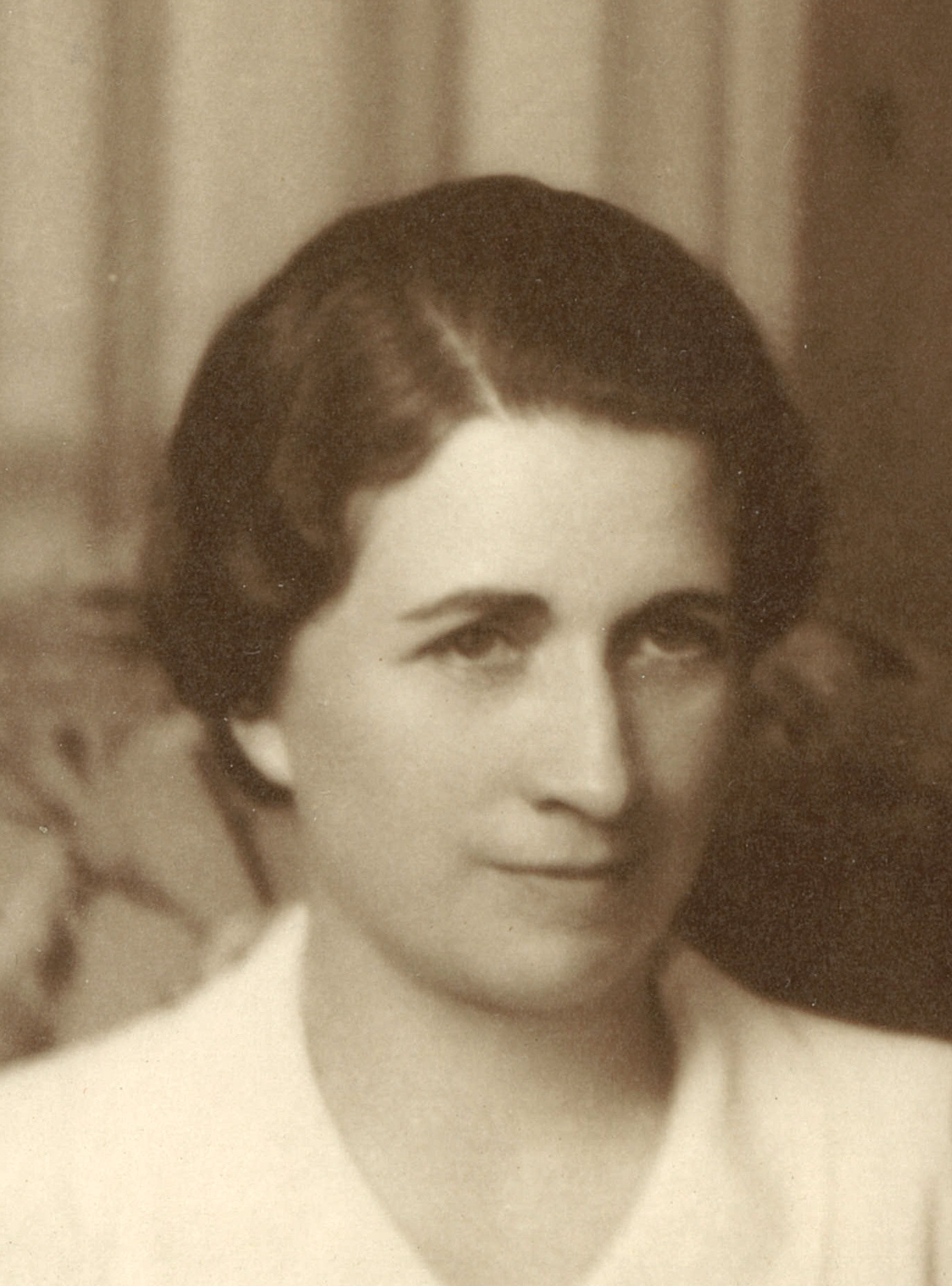
BirthMother Margaret Shannon Laubach born
Daughter of Dr. C.C. and Sarah Kathrine (Shannon) Laubach.
-
News
Jesse Iams promoted at Gypsy Oil
The Tulsa Daily World reports the promotion of J. D. Iams, two-time Tulsa tennis champion.
-
Marriage
Parents marry in Tulsa
Jesse Dorsey Iams marries Margaret Shannon Laubach, 28 April 1920.
-
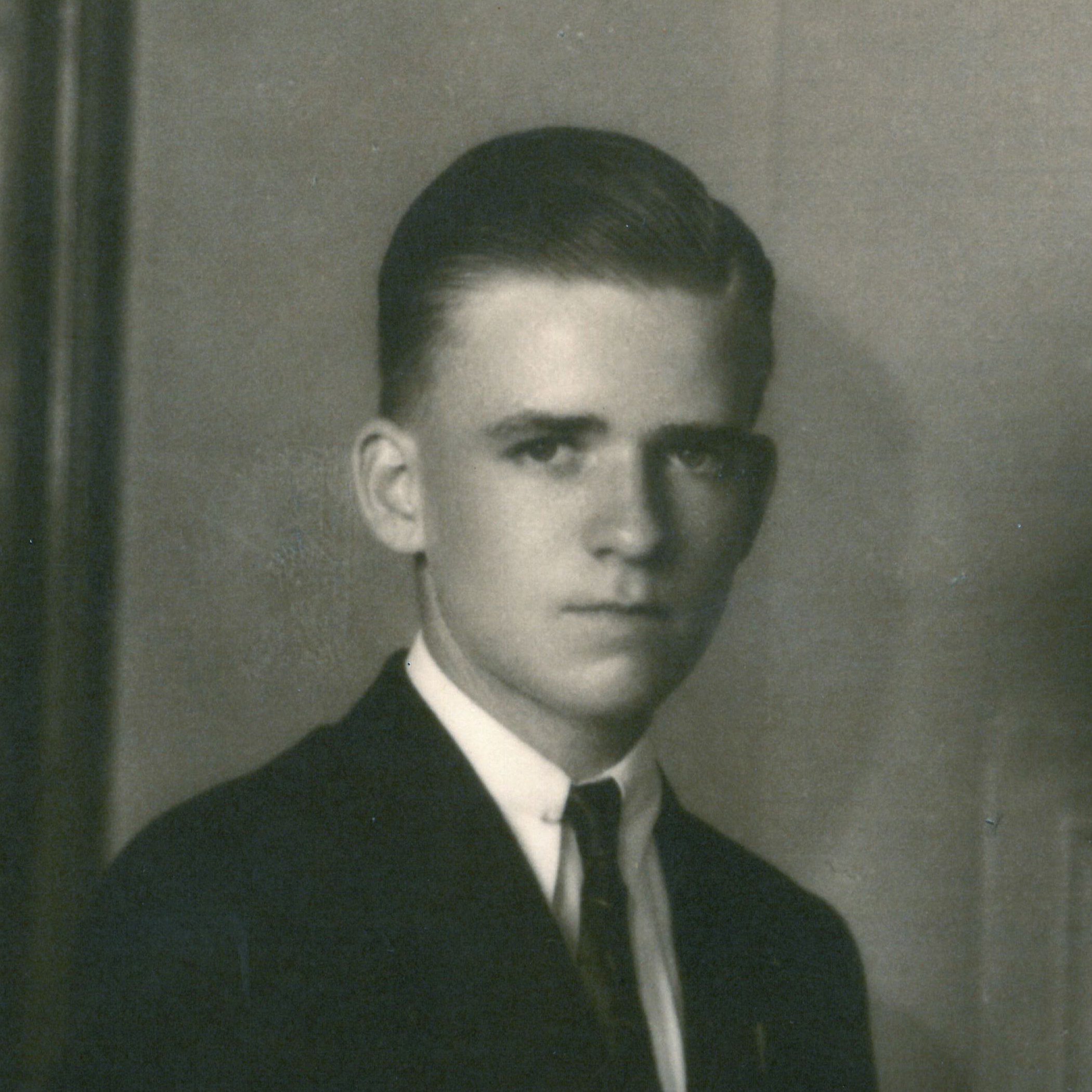 Birth
BirthBorn in Tulsa
John Dorsey "Jack" Iams, eldest of three, 30 December 1920.
-
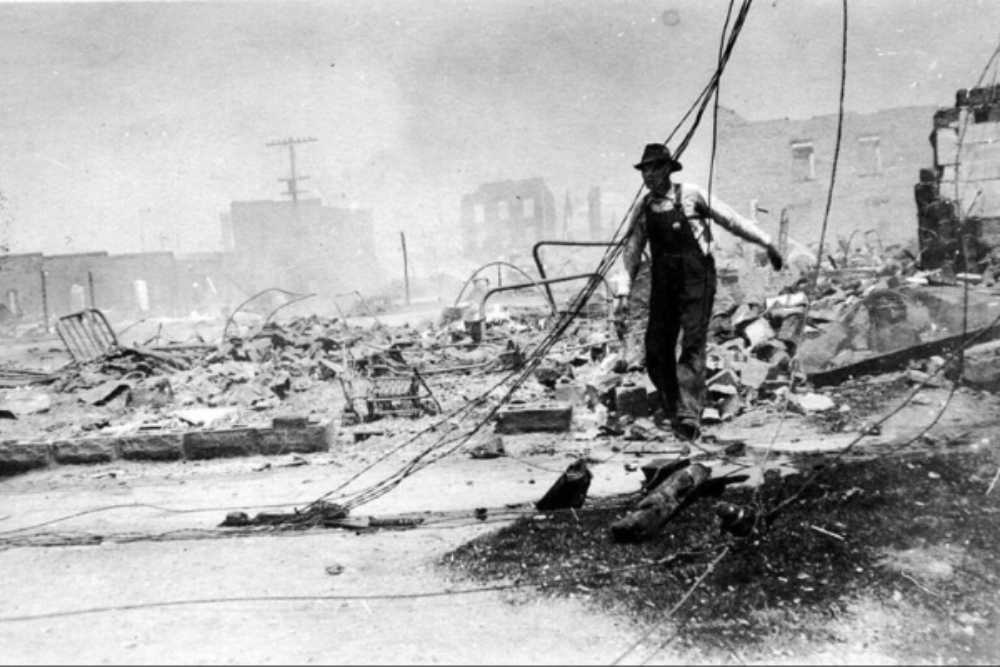 Massacre
Tulsa race massacre
31 May – 1 June. White mobs destroy Black Wall Street, killing as many as 300 and leaving thousands homeless. The Iams family was there.
-
Birth
Sister Kathrine Virginia born
-
Birth
Brother Donald Richard born
-
Family
Iams family portrait, Tulsa
Family photograph — the year before Jack matriculates at MIT. Margaret (43), Donald (6), Jack (17), Kathrine (14).
-
Education
Graduates Central High School
-
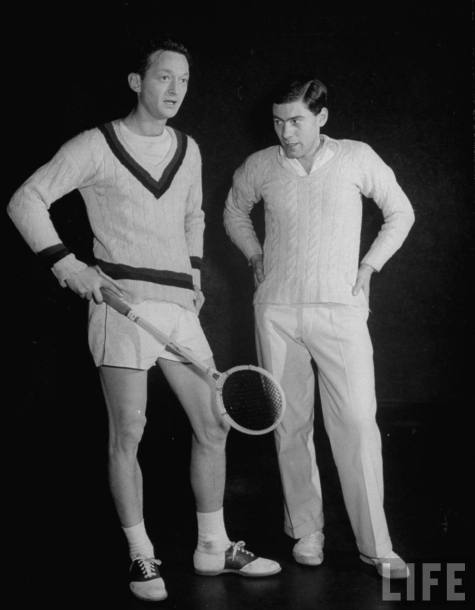 Athletics
MIT freshman squash numerals
Awarded numerals signifying competition on the freshman squash team — a competitive racquets background that would persist through his life.
-
Honor
MIT Honor Roll, Class of 1942
-
Teaching
Summer meteorology assistantship
2 July. President Killian appoints Iams an assistant in MIT's wartime Special Meteorological Program — undergraduates rarely received such instructional appointments.
-
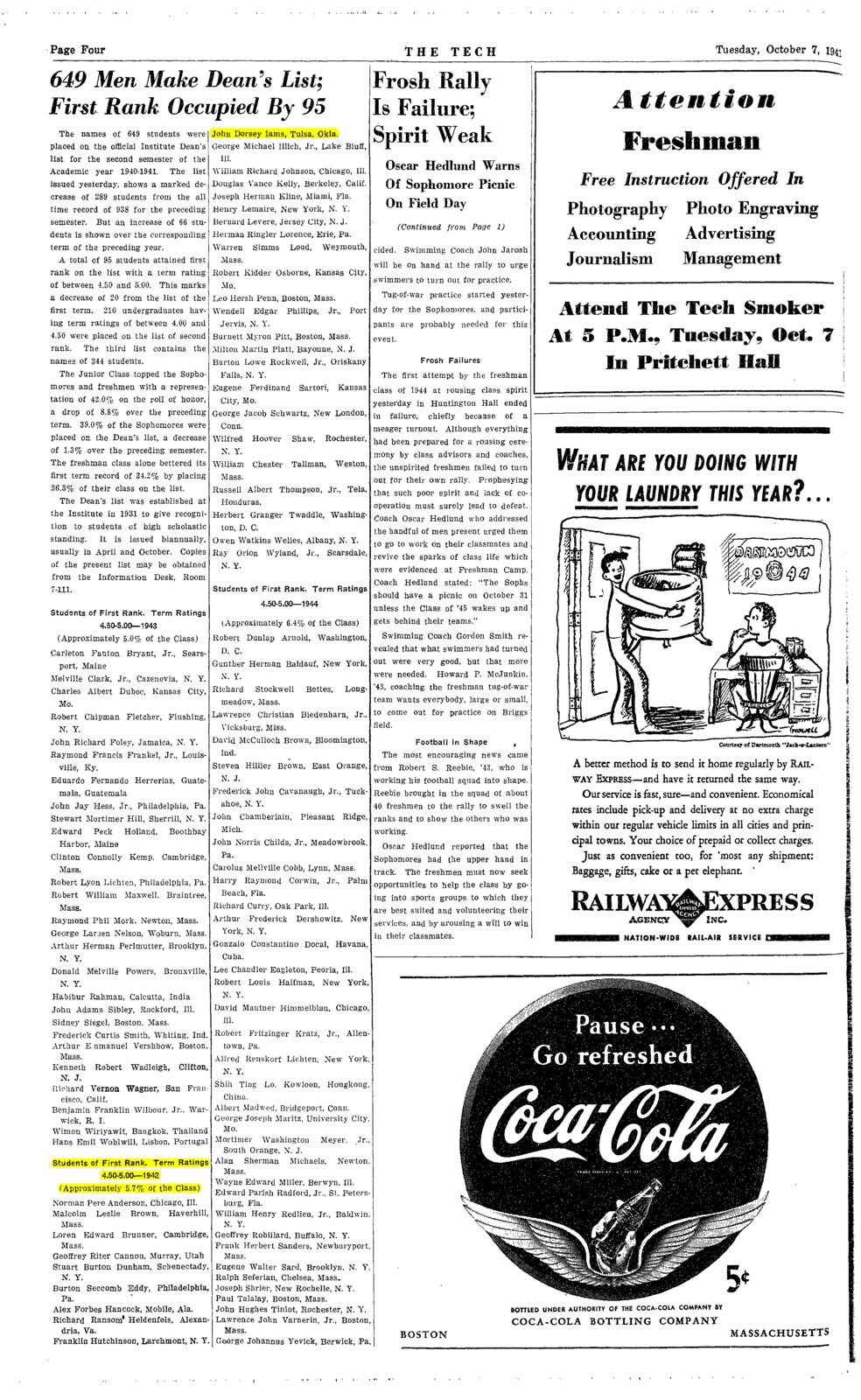 Honor
HonorMIT Dean's List
7 October. Top academic standing entering senior year.
-
Thesis
B.S. Physics thesis submitted
"Temperature Errors in Pressure Capsules Designed for Precision Measurements," 10 April 1942. Aeronautical-instrument work in the NBS/NACA tradition.
-
Graduation
Graduates MIT, accelerated for the war
27 April. Bachelor of Science in Physics. Graduation ceremonies advanced a month so the class could enter wartime service.
-
Marriage
Marries Mary Lemmon
27 April. The Palm Beach Post records the marriage during Jack's training at the Army Signal Corps radar school at Camp Murphy.
-
WarWartime
Army Signal Corps radar school
Trains at the Signal Corps' top-secret radar school on the Florida Treasure Coast. Commissioned 2d Lieutenant; eventually 1st Lieutenant.
-
Postwar
Postwar Boston
Returns to Cambridge for graduate study in international affairs under Norman J. Padelford. Christian Science Monitor places him in the city, 8 October.
-
Career
Joins US State Department
Begins Foreign Service career; named in a Padelford-edited MIT publication that year for directing the drafting of two maps.
-
PostingState Dept
Athens political officer
Posting in the wake of the Truman Doctrine — the Greek civil war is at its height.
-
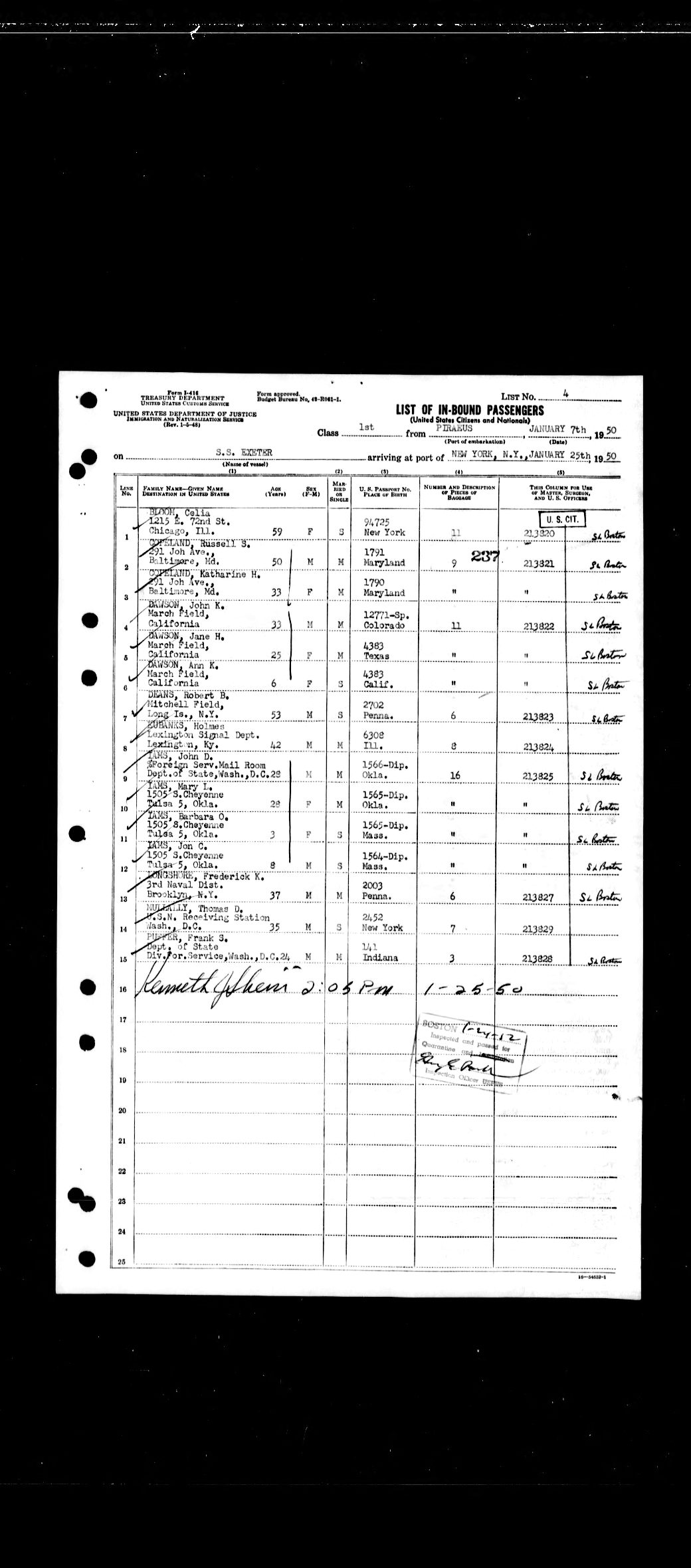 Travel
Piraeus → New York
Returns from the Greek posting; promoted within the Foreign Service grade structure that April.
-
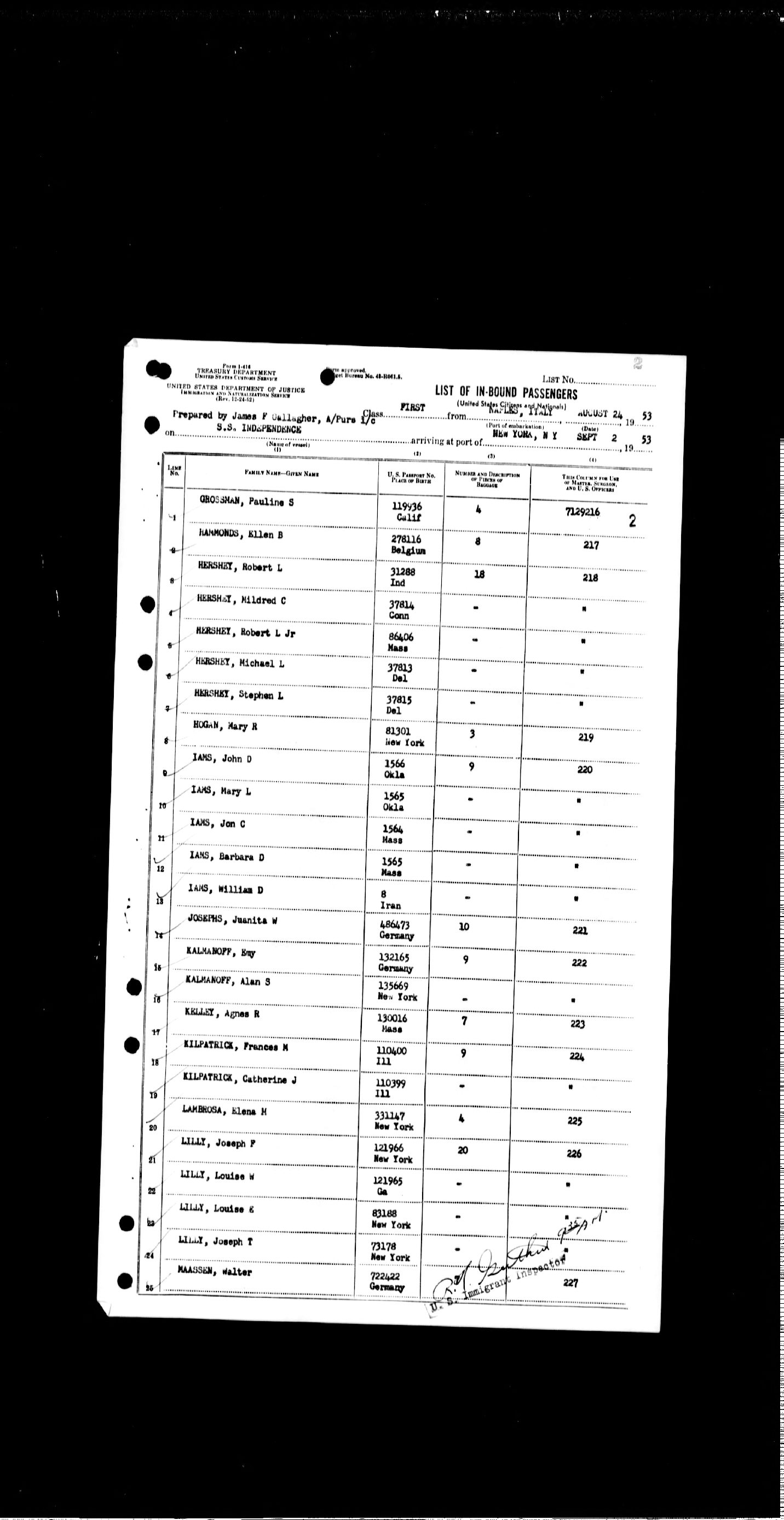 Travel
Naples → New York
-
PostingState Dept
Prague political-economics officer
Behind the Iron Curtain by year's end.
-
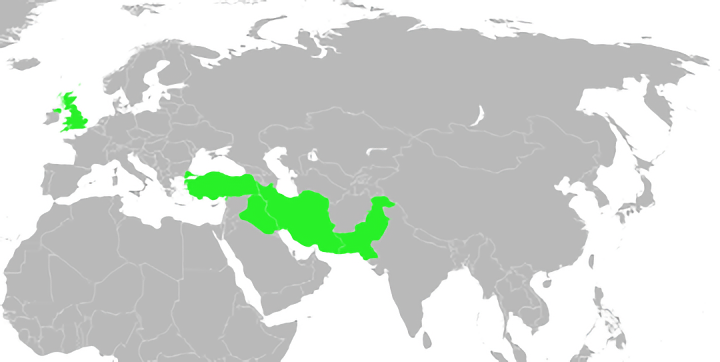 CIAIntelligence
CIA Branch Chief — Greek/Turkish/Iranian
Chief, Greek-Turkish-Iranian Branch, Office of Intelligence Research, Division for Near East, South Asia and Africa. Among the alliances on his desk: the Baghdad Pact / CENTO.
-
CIA
Memo to DCI McCone
10 July. Iams writes Director of Central Intelligence John McCone on the implementation of new policy concerning public release of technical surveillance countermeasures.
-
Book
Rebellion — the FSI book on the Greek Communist Party
With Col. William C. Chamberlin, USMC. 487-page mimeographed study for the Foreign Service Institute's Fifth Senior Seminar in Foreign Policy. Declassified 1999.
-
 CIA
CIAJacqueline Kennedy / Czechoslovakia letter (CIA file)
Iams's name appears on page 9 of a CIA file concerning a Jacqueline Kennedy letter and Czechoslovakia.
-
CIAIntelligence
Director of Joint Computer Support, CIA
-
CIA
Family Jewels archive released
16 May. The internal CIA "Family Jewels" archive of Cold-War abuses is compiled. Iams's name appears in the file. Declassified June 2007.
-
CIAIntelligence
Comptroller, Central Intelligence Agency
-
CIA
Special Assistant for SIGINT to the DCI
Signals-intelligence policy role at the very top of the Agency.
-
Death
Died in Santa Fe
2 June. Buried under his Social-Security record of Massachusetts residency. Outlived by his third wife, Dania Merrill.
Source List
Chamberlin, William C., and John Dorsey Iams. Rebellion: The Rise and Fall of the Greek Communist Party. Washington: Foreign Service Institute, Department of State, 1963. 487 pp., mimeographed text. Term paper for the Fifth Senior Seminar in Foreign Policy. Declassified 17 September 1999. Digital images, Internet Archive, document CIA-RDP78-03581R000300100069-0. https://archive.org/details/cia-readingroom-document-cia-rdp78-03581r000300100069-0.
“Camp Murphy (Florida).” Wikipedia. Accessed 26 May 2026. https://en.wikipedia.org/wiki/Camp_Murphy_(Florida).
“Camp Murphy.” Museum of Florida History. https://www.museumoffloridahistory.com/explore/exhibits/permanent-exhibits/world-war-ii/historical-sites/southeast-listing/camp-murphy/.
Christian Science Monitor. “Boston Police Busy Probing Crime Reports.” 8 October 1945, vol. 37, issue 266, p. 2, col. 6. Digital images, Internet Archive. https://archive.org/details/per_christian-science-monitor_1945-10-08_37_266.
Iams, John D. “Temperature Errors in Pressure Capsules Designed for Precision Measurements.” Bachelor of Science thesis in Physics, Massachusetts Institute of Technology, 1942. Digital reproduction in author’s possession.
Massachusetts Institute of Technology. Bulletin, Catalogue Issue. Volume 76, Number 4. Cambridge: Massachusetts Institute of Technology, June 1941. Course Catalogs, AC-0598, Box 23, digital storage 2012_047acc. Department of Distinctive Collections, MIT Libraries, Cambridge, Massachusetts. Finding aid: https://archivesspace.mit.edu/repositories/2/archival_objects/128510 (accessed 2 June 2026). Digital reproduction in author’s possession.
Massachusetts Institute of Technology. Office of the President. Records of Karl Taylor Compton and James Rhyne Killian, AC-0004. MIT Libraries, Department of Distinctive Collections, Cambridge, Massachusetts.
Padelford, Norman J., ed. International Relations: A Selection of Current Readings. MIT Publications in International Affairs, Number II. Cambridge: Technology Press of MIT, June 1947. Printed by Addison-Wesley Press, Cambridge. Digital reproduction, Internet Archive. https://archive.org/details/internationalrel0000vari_s3f6.
Palm Beach Post (West Palm Beach, Florida). “Marriage of Iams / Lemmon.” 27 April 1943, p. 6. Digital images, Newspapers.com, clip page by user dorsey4801. https://www.newspapers.com/article/154100659.
MIT ArchivesSpace. “Padelford, Norman J (Norman Judson), 1903–1982.” Agent record. https://archivesspace.mit.edu/agents/people/992.
MIT ArchivesSpace. “Norman Judson Padelford papers.” Resource record 972. https://archivesspace.mit.edu/repositories/2/resources/972.
MIT ArchivesSpace. “Collection on World War II Training Programs at the Massachusetts Institute of Technology.” Resource record 1125. https://archivesspace.mit.edu/repositories/2/resources/1125.
MIT ArchivesSpace. “Massachusetts Institute of Technology, Office of the Registrar, Government War Service student records.” Resource record 76. https://archivesspace.mit.edu/repositories/2/resources/76.
End of synthesis. Prepared 26 May 2026.
John D. Iams, “Temperature Errors in Pressure Capsules Designed for Precision Measurements” (Bachelor of Science thesis, Department of Physics, Massachusetts Institute of Technology, 1942), title page; digital reproduction in author’s possession (file path: “Iams, John D. - Temperature Errors in Pressure Capsules Designed for Precision Measurements (1942).pdf”). ↩︎
John D. Iams to Professor George W. Swett, Secretary of the Faculty, 10 April 1942, letter of transmittal, in Iams, “Temperature Errors in Pressure Capsules” (1942). ↩︎ ↩︎
Bulletin, Massachusetts Institute of Technology, Catalogue Issue, June 1941 (Cambridge: MIT, 1941), “Instructing Staff: Mechanical Engineering,” p. 21, identifying “George Wright Swett, S.B., Professor of Machine Design; Secretary of the Faculty.” ↩︎
Bulletin, Massachusetts Institute of Technology, Catalogue Issue, vol. 76, no. 4 (Cambridge: Massachusetts Institute of Technology, June 1941); Course Catalogs, AC-0598, Box 23, digital storage 2012_047acc; Department of Distinctive Collections, MIT Libraries, Cambridge, Massachusetts; finding aid, ArchivesSpace at MIT (https://archivesspace.mit.edu/repositories/2/archival_objects/128510 : accessed 2 June 2026); digital reproduction in author’s possession (file: AC0598_001942.pdf). ↩︎ ↩︎
J. C. Slater and N. H. Frank, Introduction to Theoretical Physics (New York: McGraw-Hill, 1933). Course numbers 8.461 (first term) and 8.462 (second term) of the MIT Physics senior-year curriculum, listed in MIT Bulletin, June 1941, p. 65. ↩︎
Iams, “Temperature Errors in Pressure Capsules” (1942), acknowledgments: “The author wishes to express his appreciation of the stimulating assistance and helpful suggestions offered by Professor Walter McKay and Mr. D. P. Keily of the Aeronautical Engineering Department at M.I.T.” ↩︎ ↩︎
Iams, “Temperature Errors in Pressure Capsules” (1942), dedication: “to MARY GREY BALLARD. Because she never had a dedication.” ↩︎
MIT Bulletin, June 1941, “Instructing Staff: Meteorology,” p. 23. ↩︎ ↩︎
J. R. Killian, Jr., letter to D. L. Rhind and memorandum to Mr. MacKinnon, both 2 July 1941; folder “Iams, John Dorsey,” Box 117; Massachusetts Institute of Technology, Office of the President, Records of Karl Taylor Compton and James Rhyne Killian, AC-0004; MIT Libraries, Department of Distinctive Collections, Cambridge, Massachusetts; digital images supplied by the repository via Aeon, May 2026. ↩︎ ↩︎ ↩︎
Iams, “Temperature Errors in Pressure Capsules” (1942), p. 4. ↩︎
Iams, “Temperature Errors in Pressure Capsules” (1942), p. 4, citing Brombacher, Hersey, Theodorsen, Wildhack and Goerke. Brombacher and Wildhack are documented National Bureau of Standards instrumentation specialists of the 1930s–40s; Theodorsen was the NACA’s leading aerodynamicist; the citations together place Iams’s thesis within the NBS/NACA aircraft-instrument research community. ↩︎
MIT Bulletin, June 1941, “Instructing Staff: Physics,” p. 25. ↩︎
MIT Bulletin, June 1941, “Instructing Staff: Mathematics,” p. 21. ↩︎
MIT Bulletin, June 1941, members of the MIT Corporation, p. [administration front matter]. ↩︎
“Aviation Cadet Training Program (USAAF),” Wikipedia, accessed 26 May 2026, https://en.wikipedia.org/wiki/Aviation_Cadet_Training_Program_(USAAF); “Wind, war and weathermen,” MIT News, 7 June 2011, https://news.mit.edu/2011/timeline-forecasting-0607. ↩︎
“Marriage of Iams / Lemmon,” Palm Beach Post (West Palm Beach, FL), 27 April 1943, p. 6; digital images, Newspapers.com (https://www.newspapers.com/article/154100659 : accessed 27 August 2024), clip page by user dorsey4801. ↩︎
“Camp Murphy (Florida),” Wikipedia, accessed 26 May 2026, https://en.wikipedia.org/wiki/Camp_Murphy_(Florida); “Camp Murphy,” Museum of Florida History, https://www.museumoffloridahistory.com/explore/exhibits/permanent-exhibits/world-war-ii/historical-sites/southeast-listing/camp-murphy/; “World War II radar camp part of Treasure Coast history,” WPTV (Stuart, FL), https://www.wptv.com/news/region-martin-county/hobe-sound/world-war-ii-radar-camp-part-of-treasure-coast-history. ↩︎
“Boston Police Busy Probing Crime Reports,” Christian Science Monitor, 8 October 1945, vol. 37, issue 266, p. 2, col. 6; digital images, Internet Archive (https://archive.org/details/per_christian-science-monitor_1945-10-08_37_266 : accessed 30 August 2024). ↩︎ ↩︎
Norman J. Padelford, ed., International Relations: A Selection of Current Readings, MIT Publications in International Affairs, Number II (Cambridge: Technology Press of Massachusetts Institute of Technology, June 1947); printed by Addison-Wesley Press; digital reproduction, Internet Archive (https://archive.org/details/internationalrel0000vari_s3f6 : accessed 31 August 2024). Iams is credited in the front matter as having directed the drafting of two maps included as a general interest feature. ↩︎
“Padelford, Norman J (Norman Judson), 1903–1982,” MIT ArchivesSpace agent record, https://archivesspace.mit.edu/agents/people/992; biographical summary at MIT Museum, https://mitmuseum.mit.edu/collections/person/padelford-norman-judson-12718; Collection: Norman Judson Padelford papers, MIT ArchivesSpace Resource 972, https://archivesspace.mit.edu/repositories/2/resources/972. ↩︎
“Iams, John Dorsey (1921-1996) - 1962-07-10 - memo to CIA Director John McCone.pdf,” document in family collection. ↩︎
“Iams, John Dorsey (1921-1996) - 1964-02-04 - CIA Jackie Kennedy Letter to Czechoslavakia (p. 9).pdf,” document in family collection. ↩︎
“Iams, John Dorsey (1921-1996) - 1973-05-16 - CIA Family Jewels.pdf,” document in family collection. CIA “Family Jewels” report compiled 1973; declassified June 2007. ↩︎
William C. Chamberlin (Col., USMC) and John Dorsey Iams, Rebellion: The Rise and Fall of the Greek Communist Party (Washington: Foreign Service Institute, Department of State, 1963), 487 pp., mimeographed text with maps, appendices, and bibliography; term paper for the Fifth Senior Seminar in Foreign Policy of the Foreign Service Institute; declassified 17 September 1999; digital images, Internet Archive, document CIA-RDP78-03581R000300100069-0, https://archive.org/details/cia-readingroom-document-cia-rdp78-03581r000300100069-0. ↩︎