Who was William L. Iams?
1872 – 1896
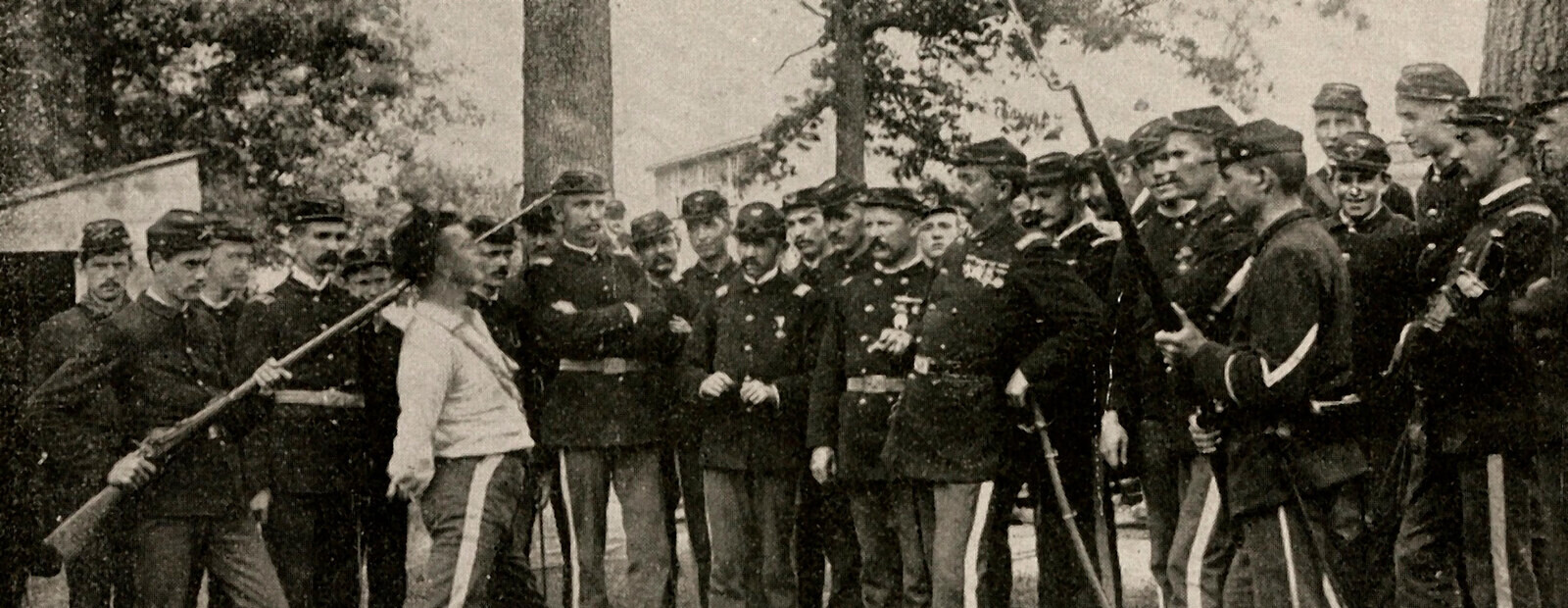
William L. Iams was nineteen years old, a private in Company K of the Tenth Regiment, Pennsylvania National Guard, when on the afternoon of Saturday, 23 July 1892, he stretched out under a shade tree in front of his colonel’s tent at Camp Sam Black, heard that an anarchist had just shot Henry Clay Frick in Pittsburgh, and made the worst three-word decision of his short life. “Three cheers for the man who shot Frick.” The cheer was never given. The colonel was twenty feet away inside the tent, and heard every word.
What followed — a summary court-martial, twenty-eight minutes hanging by his thumbs until he lost consciousness, half his head shaved, the “Rogues’ March” played as he was drummed out of camp in borrowed overalls — turned a Greene County farm boy into a national sensation for two weeks in the summer of 1892, then into a test case for the legal limits of military discipline, then, very quickly, into nothing at all. Four years after Homestead he was shot in a Baltimore boarding-house by a fellow lodger he had thrown down the stairs. He died at twenty-three.
This is the story of how each of those things happened, and what the surviving record allows us to see.
A Greene County name
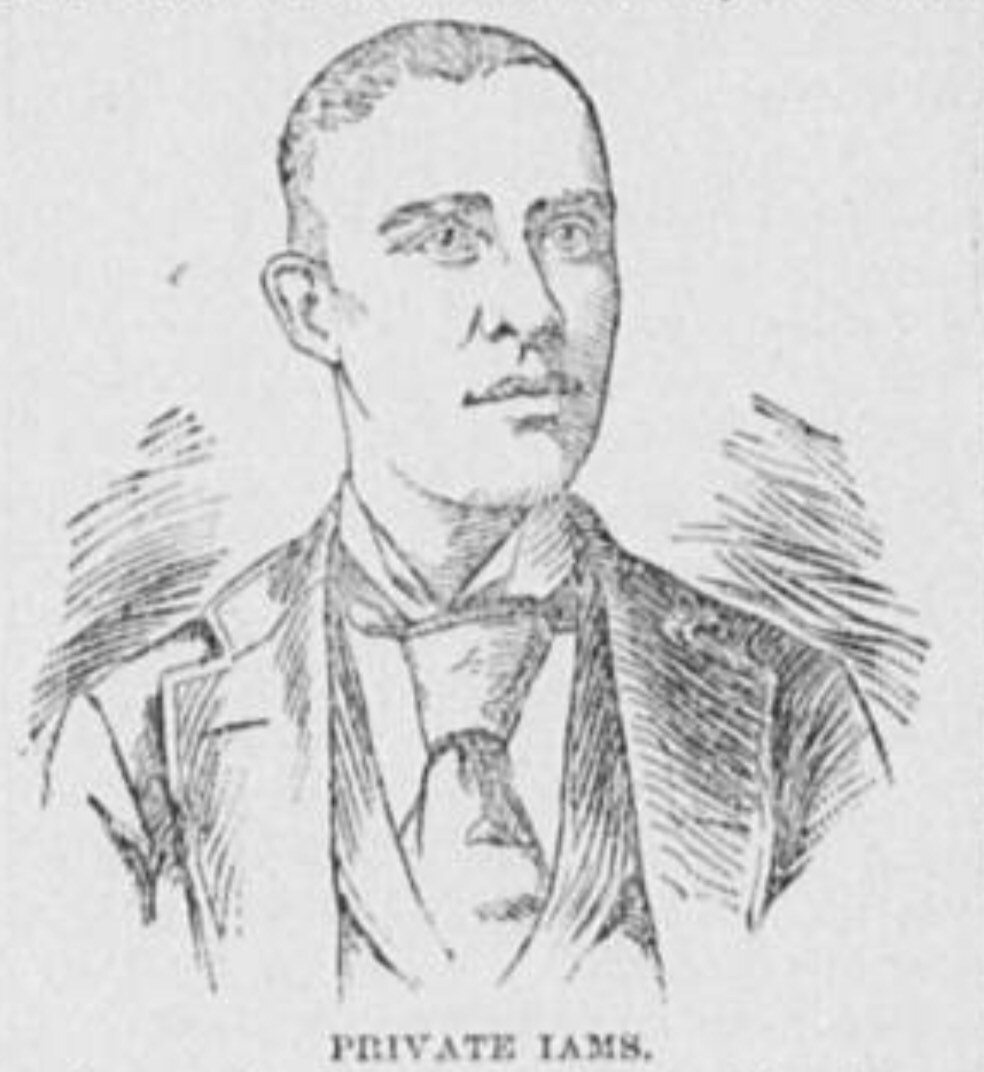
William was born in 1872 in southwestern Pennsylvania, the second of four children of Joseph Martin Iams (1848–1924), a schoolteacher, and Sarah Piatt (1849–1937).1 The family lived near Waynesburg in Greene County, the heart of an Iams settlement reaching back four generations.2 His older sister Victoria had been born in 1870; his younger sisters and brother followed in 1878 (Canzada) and 1882 (Thomas Mayley Harris). When the Pittsburgh Post described William to its readers in 1892, it noted — with a touch of bewilderment — that he was “a native of Greene county, living near Waynesburg,” and that “the Iams family is one of the most prominent and respectable in Greene county and has turned out a good many men who are a credit to both the county and the State.”3 An ex-district attorney of the county, hearing the news in Pittsburgh, said he was “confident that there was a misunderstanding, or at least that the matter was susceptible of some explanation that would put young Iams in a better light.”3
It would not.
The strike comes to camp
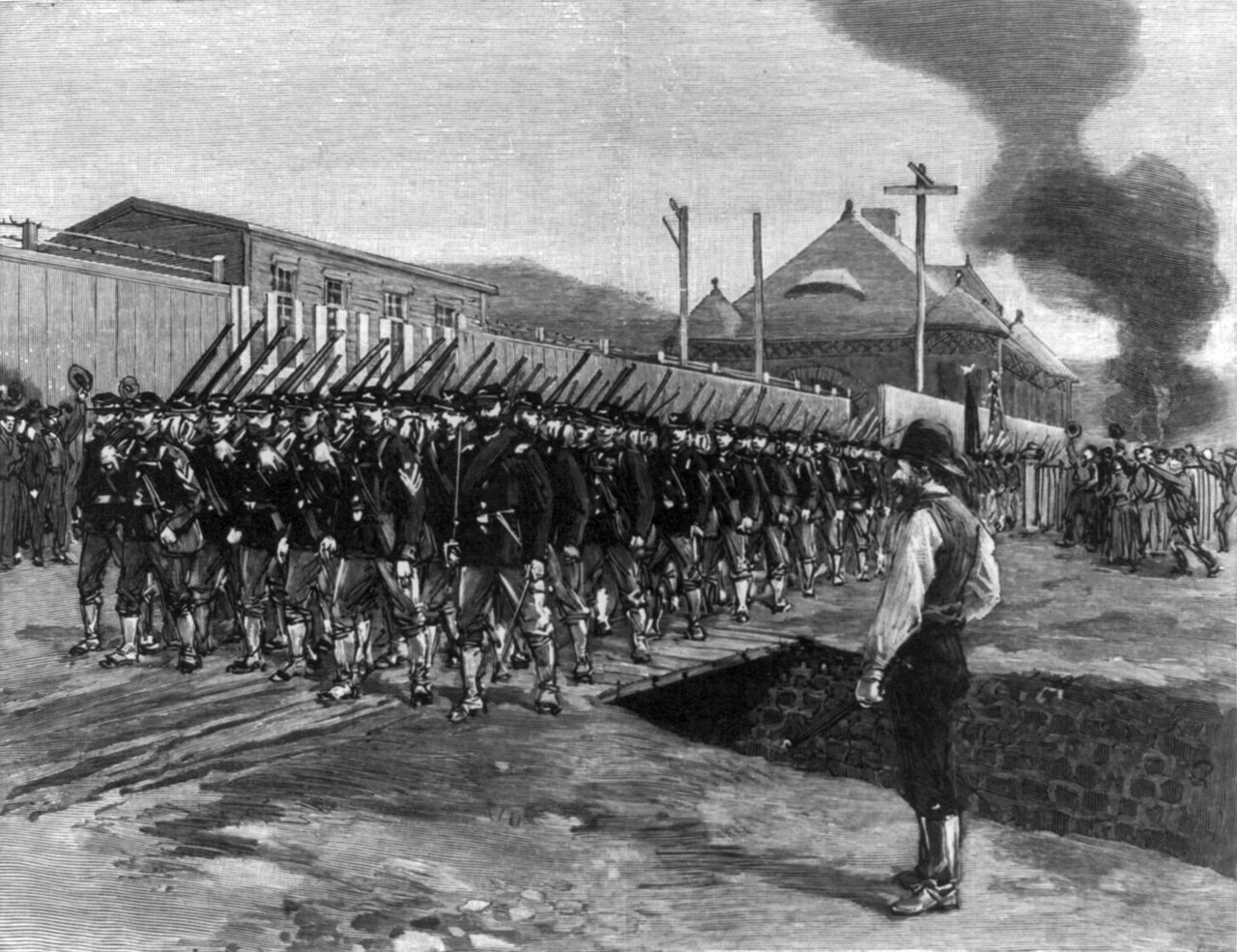
The Homestead Steel Strike of 1892 has been told a hundred times, and the bones are familiar: Carnegie’s chairman, Henry Clay Frick, refusing to renegotiate the union’s contract; the locked-out workers seizing the mill on 1 July; Frick’s private army of three hundred Pinkerton agents floating up the Monongahela on barges in the dark before dawn on 6 July; the twelve-hour gunfight on the riverbank; seven Pinkertons and nine strikers killed; the surrender of the Pinkertons under guarantee of safe conduct, then their public beating as they were marched through the town.4 Within a week, Governor Pattison had called out the entire Pennsylvania National Guard division — some 8,500 men — to occupy Homestead. The Tenth Regiment, recruited from Greene and Washington counties, arrived under canvas at Camp Sam Black across the Monongahela from the steel works. William, who had enlisted as a private in Company K from Waynesburg, was nineteen.
Sympathy for the strikers in the ranks was an open secret. The Pittsburgh Post would later report, almost in passing, that “ever since the State troops encamped here there has existed among some of the soldiers a feeling of sympathy for the strikers and their cause.”3 What had not yet happened was an open expression of it. That changed on the afternoon of 23 July.
Three cheers
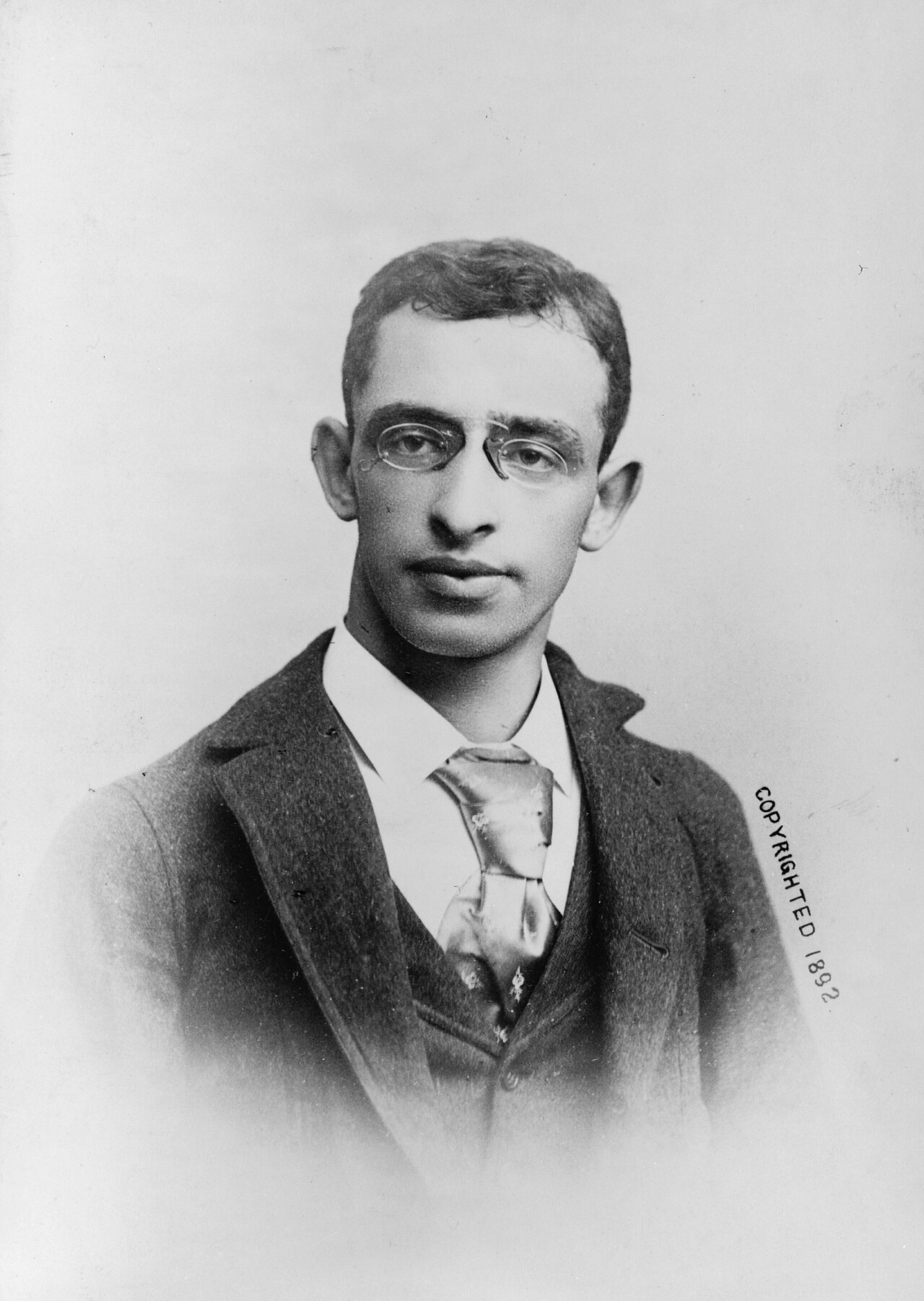
Word reached Camp Sam Black from the division signal station that Frick had been shot. Alexander Berkman, a twenty-one-year-old anarchist who had travelled to Pittsburgh with Emma Goldman’s blessing and a borrowed revolver, had walked into Frick’s office that morning, fired twice into his neck, and — when Frick refused to go down — stabbed him three times with a sharpened file before being subdued by a carpenter and a deputy sheriff.5 Frick, astoundingly, survived. Berkman was arrested and would soon be photographed at the Allegheny police station, twenty-two years old, in a borrowed necktie, the picture that has come down to us as the public face of the deed.
In camp the news passed quickly from officer to officer, then to the ranks. The Pittsburgh Post set the scene:
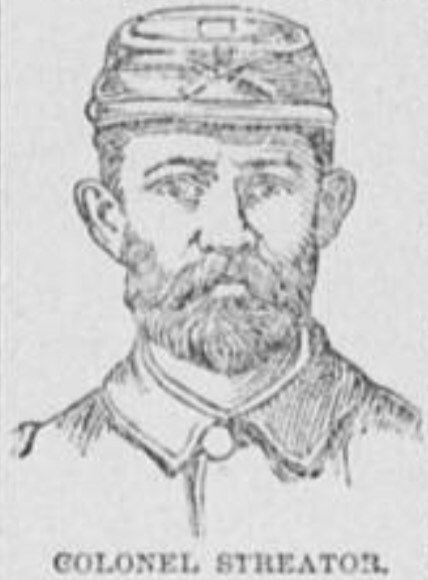
Just in front of Lieutenant Colonel J. B. R. Streator’s tent, Tenth regiment, a group of men lay in the shade of a large tree. Among them was Private W. L. Iams of Company K. A soldier strode up to the party and announced that H. C. Frick had been shot by a Russian nihilist. A look of horror overspread most of the faces, but the lips of the messenger had hardly closed when Iams shouted: “Three cheers for the man who shot Frick.”3
The cheers were never given. Streator, inside the tent, came to the door, watched the group for a moment, and ordered the regiment to fall in. Within half an hour the entire Tenth was drawn up in line.
“There is in our ranks a man who has committed a crime against our rules and laws. It is treason to them and perjury to his oath, taken when he entered the National Guard. While in my tent a short time ago, I heard some person without exclaim, ‘Three cheers for the man who shot Frick.’ If he is in these lines I command him to step out.”
A hush fell upon the regiment as Private Iams stepped from the lines of Company K. His face was pale, but his head was held up in a defiant manner.
“Did you shout, ‘Three cheers for the man who shot Frick’?” asked Colonel Streator.
“I did,” Iams replied.3
The charges were treason and perjury. The court-martial — Streator and his staff, sitting in the guardhouse — took only a few minutes. William admitted what he had said, offered no explanation, refused to apologize. The verdict was guilty. Streator wrote out the sentence.
Strung up by the thumbs
The next two hours were performed in front of nearly the entire Tenth Regiment and many men from the Fourth. The Post set them down at considerable length, with the still-shaken specificity of an eyewitness account:
Iams offered no resistance as the ropes were knotted around his thumbs. The other ends were in the hands of his former comrades. He was slowly drawn up until only the tips of his toes rested on the ground. A look of fearful agony came over his face as the torture of his position came to him, but no word escaped his lips. For a while he bore most of his weight upon his feet, but in a few minutes these supports gave way. As his weight came upon his thumbs the joints almost cracked with the strain and a tremor of pain ran through his frame. The spectators, who comprised nearly all the members of the Tenth regiment and many from the Fourth, shuddered at the sight.
Surgeon Major Neff stood by, with his right hand on Iams’s heart and a watch in his left. At the expiration of 20 minutes Iams was unconscious and the surgeon ordered him cut down. After this was done a considerable time elapsed before the unfortunate victim recovered his senses.3
William himself, interviewed in Homestead the following day after the strikers had carried him back from the camp on their shoulders, set the duration a little higher and the ending more deliberate:
“After 28 minutes, though I had fought the feeling all I knew how, I fainted and was cut down. I had only two minutes more to stand, but I felt as though it was two years, and I just couldn’t hold out, although I would have died sooner than have apologized.”6
The next morning — Sunday, 24 July — the camp barber shaved his head to the skin, on the order of the divisional commander, Major-General Snowden. The three regiments of the Provisional Brigade were drawn up on the drill ground. William’s uniform had been taken from him. He was given a check suit, a straw hat, and a shirt; the band struck up the “Rogue’s March,” and he was marched at the head of the column out of camp to Swissvale Station, put on a Pittsburgh-bound train, and told he was prohibited from ever again entering the ranks of the State Guard or the United States Army, and debarred from voting in Pennsylvania.3 An “inexpressible feeling of awe,” the Post’s correspondent wrote, “pervaded the entire soldiery.”
An overnight hero
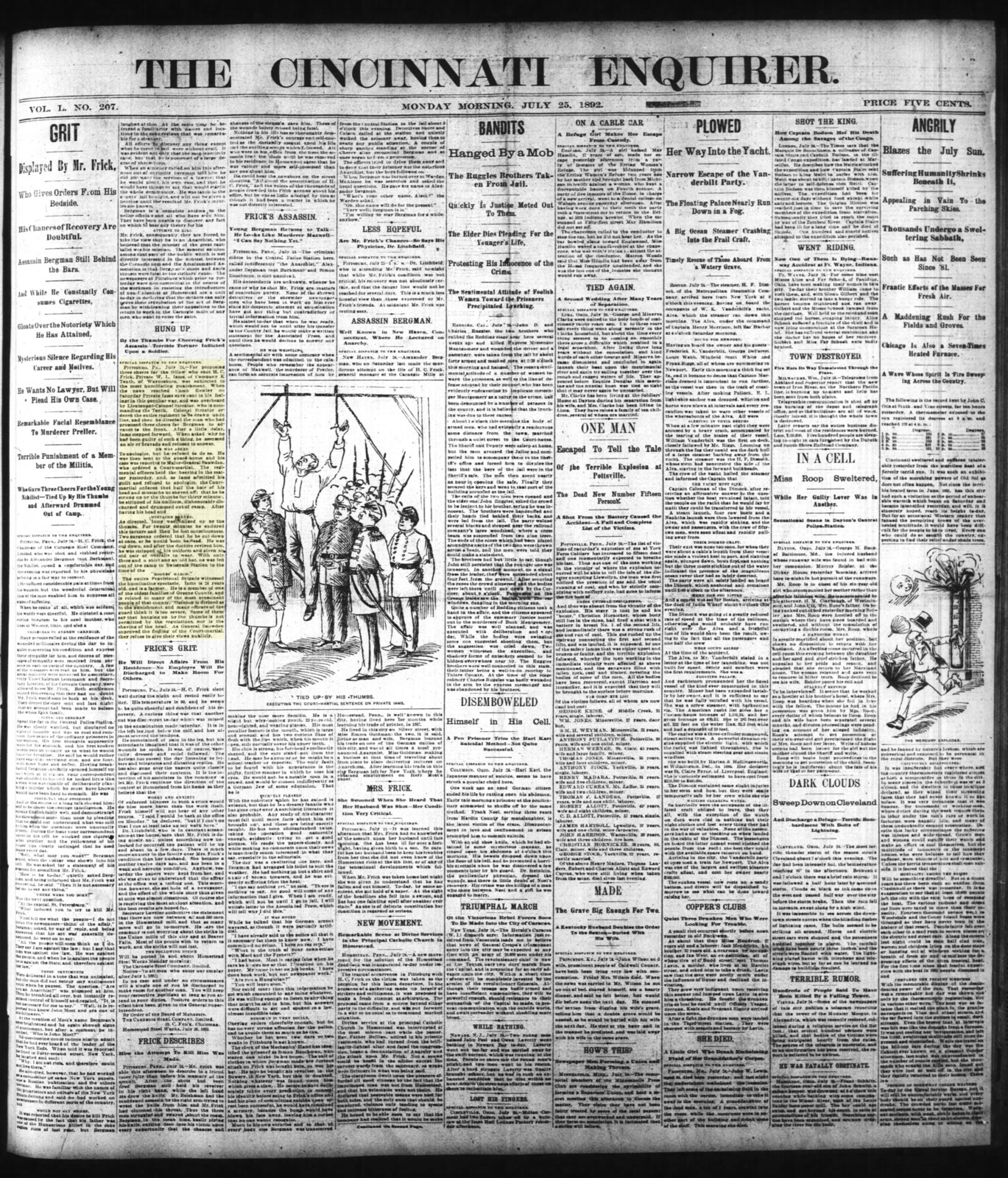
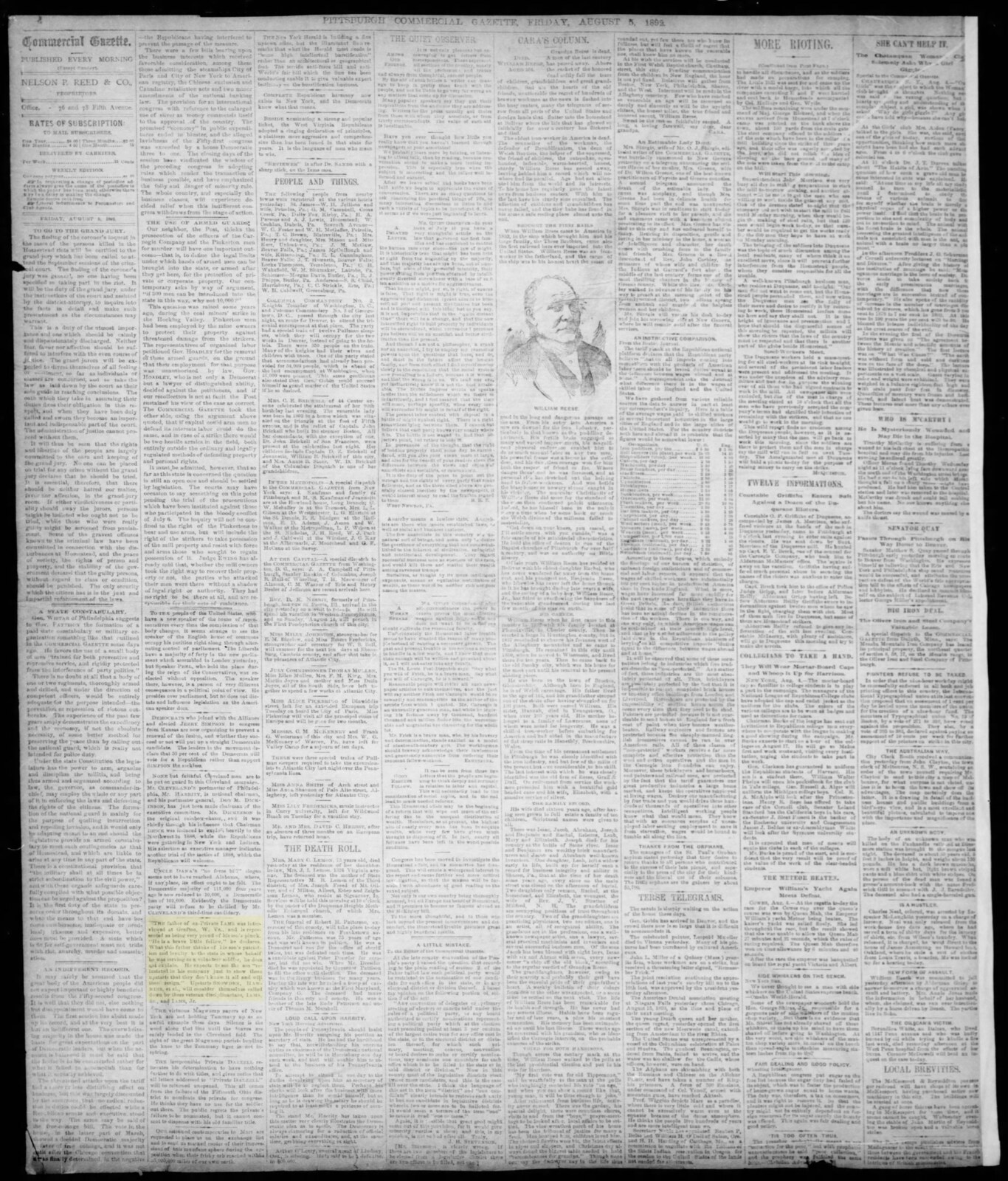
By Monday morning the country had its sensation. The Cincinnati Enquirer ran a one-column headline — HUNG UP. By the Thumbs For Cheering Frick’s Assassin — Terrible Torture Inflicted Upon a Soldier — over a half-page wire dispatch that was reprinted, in whole or in part, from Pittsburgh to Philadelphia to New York.7 The Pittsburgh Press interviewed William at Homestead and got the now-famous defiance into print on the 26th.6 His father, Joseph, tracked down in Grafton, West Virginia, told the Pittsburgh Commercial Gazette that his son was “a brave little fellow” and that he expected to see him “reinstated in his company just to show these upstarts that they don’t know it all and will then resign.”8 The paper, mildly amused, observed that “upstarts SNOWDEN, HAWKINS, et al., will consider themselves called down by these veteran disciplinarians, IAMS, Sr., and IAMS, Jr.”
The verdict on William’s offence — as opposed to his treatment — was less generous. The Chicago Tribune, reprinted in Pittsburgh on 6 August, refused to make him a hero:
By his cheers and applause of the deed of a foul anarchistic assassin he disgraced himself and richly deserved to be drummed out of camp and dishonorably discharged from the service of the state. He is not a hero — far from it. He has earned the contempt of all honorable, law-abiding men. The protests of the press are directed against the unnecessary cruelty practiced by officers in command. Meanwhile the offense committed by Iams remains as a perpetual disgrace to him.9
General Snowden, the divisional commander, gave his only press interview on the matter to a Pittsburgh Commercial Gazette correspondent in Philadelphia on 29 July. He denied that William had been hung “by the thumbs” — “his hands were tied up over his head, but he could reach the ground with his feet” — and denied that he had become unconscious. He did not deny ordering the discharge, the head-shaving, or the drumming-out, and he was unrepentant about all three. “We were at that time doing martial duty. The community was in a state of revolution. Anarchy was rampant. … In a word, it was mutiny.”10 Streator’s chief of staff, Colonel Cullinan, put it more bluntly to the same paper: “If Iams had got his deserts, he would have been taken out and shot. His punishment was not a bit too severe. … Iams may congratulate himself upon getting off so easily.”10
The officers on trial
Two days after William’s discharge his family hired an attorney — Frank P. Iams, a Pittsburgh lawyer and distant relative — to bring a civil case against Streator. “The military acts of this State have never been tested in court before,” he told the Pittsburgh Dispatch, “and this will be a precedent.”11 He ran almost at once into a section of the National Guard act forbidding civil process against any officer “engaged in such service or for thirty days after,” and was reduced to waiting for the regiment to muster out.12
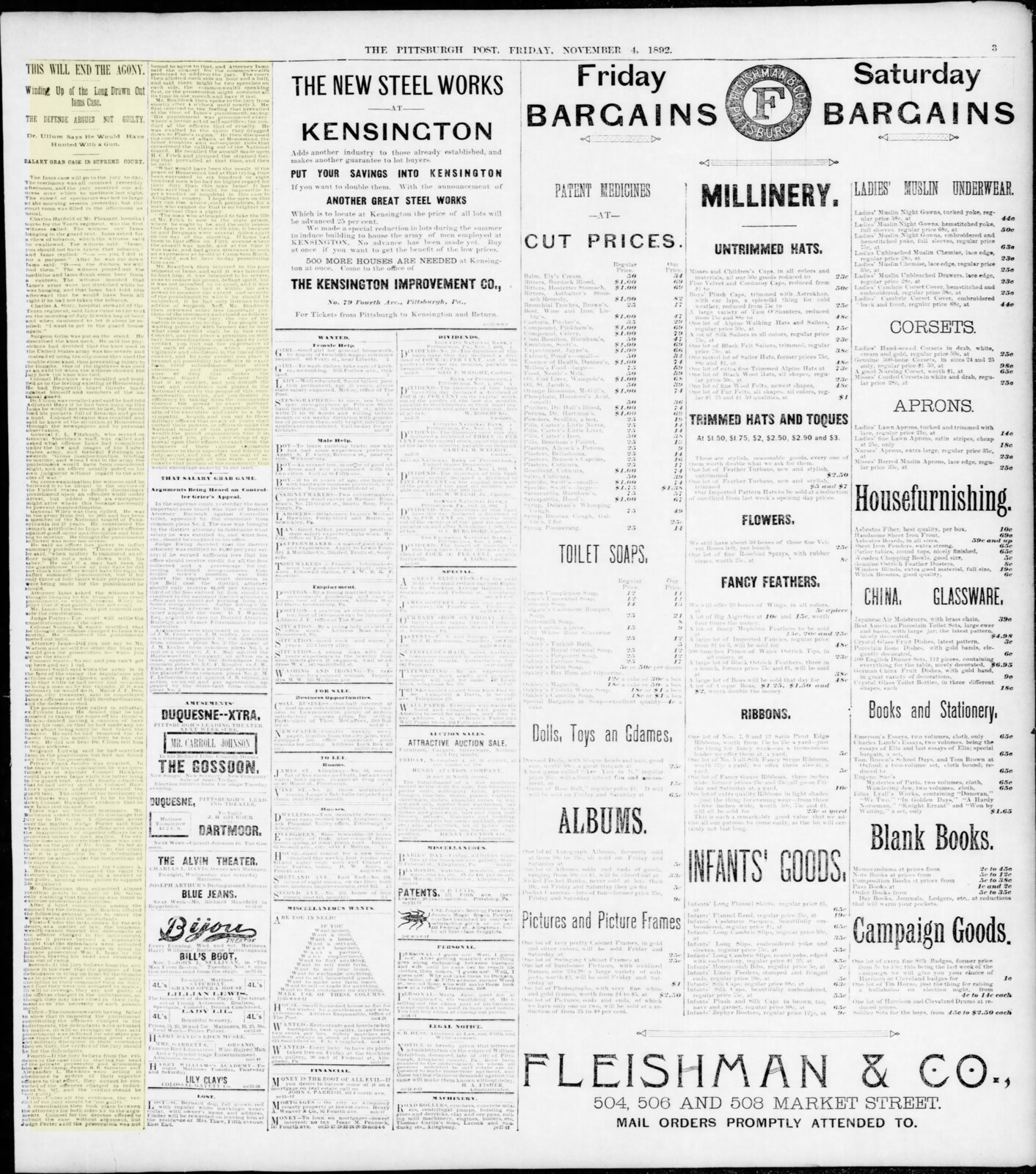
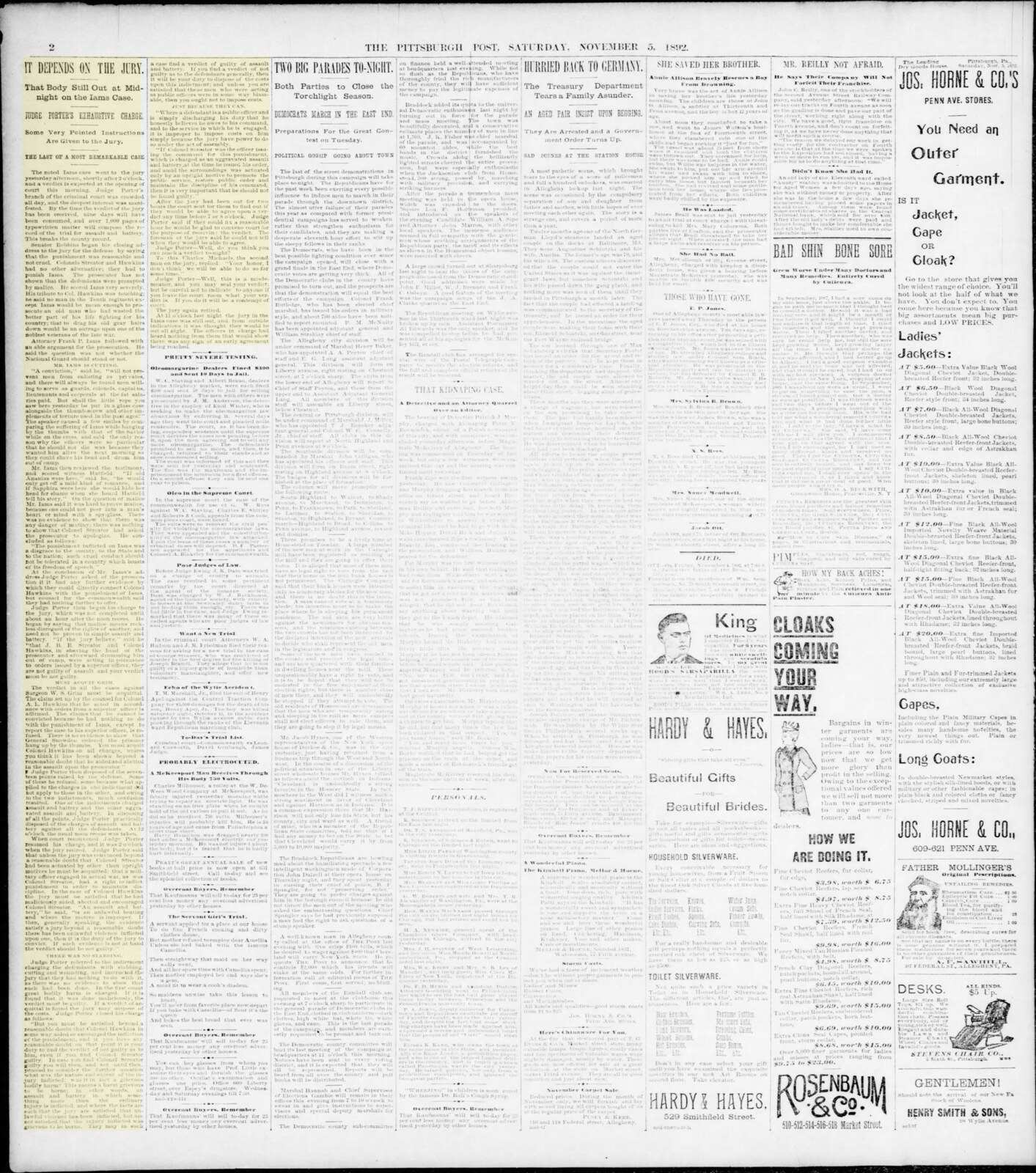
On 23 September the Allegheny County grand jury returned true bills against Lieutenant Colonel J. B. R. Streator, Colonel A. L. Hawkins, and Assistant Surgeon William Simpson Grim of the Tenth Regiment on charges of aggravated assault and battery.13 The criminal trial — argued not as a question of what had happened to William but as a question of whether National Guard officers in active service had the authority to inflict such a punishment — opened in early November. The witnesses for the defence included Generals Fitzhugh, Wiley, Snowden, and Colonel Norman M. Smith, all of whom testified, in the Post’s summary, that William’s offence was “gross insubordination tending to mutiny” and that the punishment was either “none too severe” or, in General Wiley’s careful formulation, “painful, but not cruel.”14 The lead defence counsel closed with a peroration that gives the temperature of the room:
“Acquit, and you say to these military officers that no act of yours shall curtail their powers, efforts, or efforts to make the National Guard of this great commonwealth the proud organization that it is; acquit, and you place your stamp of approval upon their efforts to exact from the members of their various regiments obedience to their superiors and fidelity to duty; acquit, and you affix the seal of security to the people of this State, and rebuke to that portion of the community that would encourage anarchy in our land.”14
The jury did acquit, on the evening of 5 November.15 The Pittsburgh Commercial Gazette wrote two days later that “public opinion will agree with the Court that no conviction was called for,” noting almost in passing that “a man who, when in the service of the State, for the maintenance of law and order, applauds assassination and cheers for the assassin should have a very insecure footing in quibbling for the exact legality of the discipline which his insubordination draws upon him.”15 The National Guard’s authority had been tested and had held. William’s name disappears from the Pittsburgh papers within the week.
Baltimore
Where he went between November 1892 and September 1895 the surviving record does not say. His father’s family stayed in Greene County and then moved south to Knoxville, Tennessee; his sisters married locally; his brother Thomas was ten years old at Homestead and would not turn sixteen for another four years. William did not return to Greene County, or did not stay long. He surfaces again, three years later, in Baltimore.
On the night of 10 September 1895 he was arrested by Patrolman O. B. Carney for “throwing missiles on the street.” He deposited $3.45 with the lieutenant on duty as security for his appearance at the early-morning hearing before Justice Benner, and then did not appear. The Baltimore Sun ran a four-paragraph notice the next day, headed WM. L. IJAMS ARRESTED — The Man Who Was Triced Up by the Thumbs at the Homestead Riots, in which the lieutenant identified him as the militiaman, “later triced up by the thumbs by order of his colonel.”16 He was, by then, twenty-three years old, working as a bartender, and was — judging by the language of the arrest report — drinking. He was living in a boarding-house at 780 West Saratoga Street, on the western edge of downtown.17
A boarding-house death
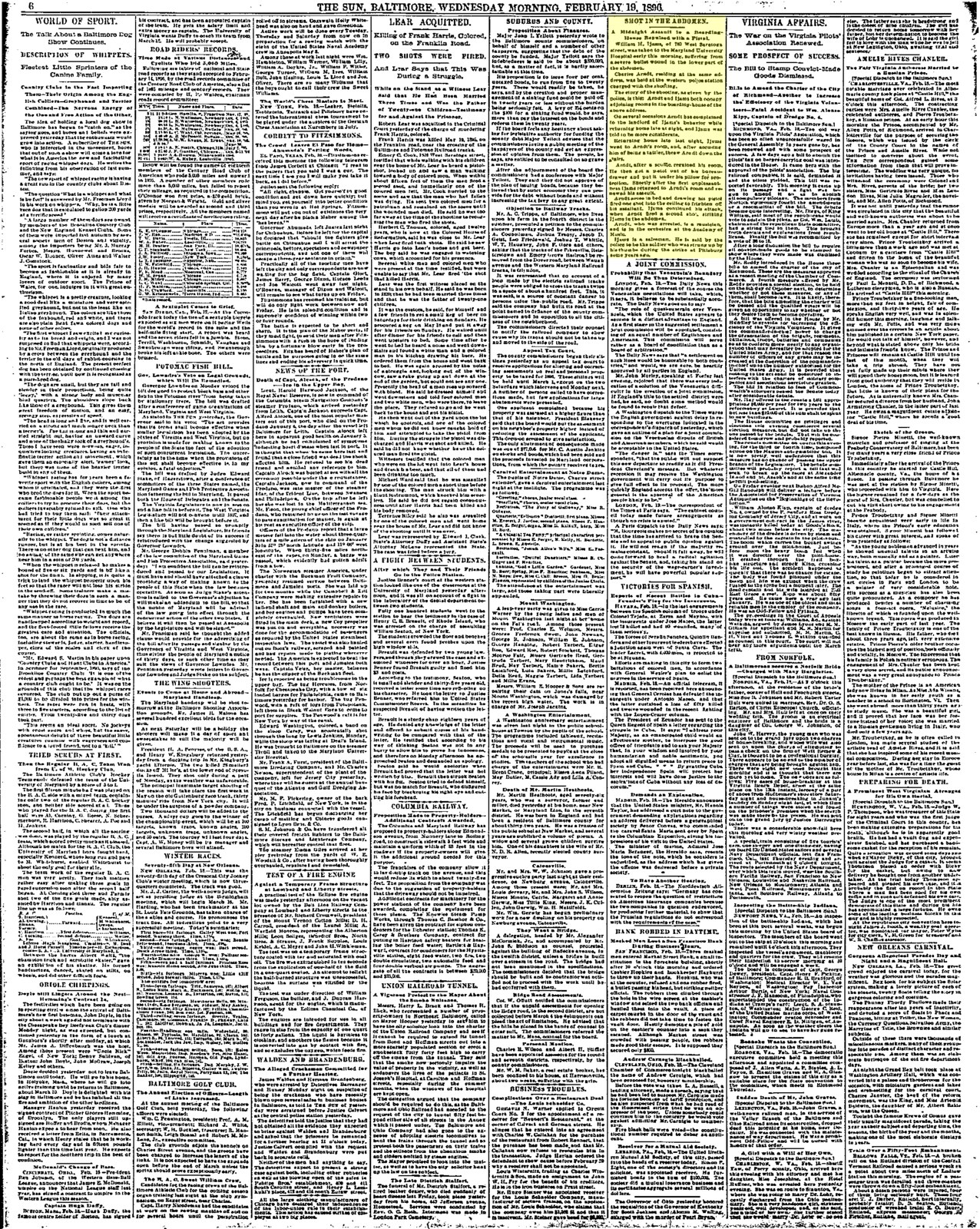
The boarding-house had at least one other lodger named Charles Arndt. The Washington Evening Times of 19 February 1896 carried the wire dispatch:
William H. Ijams, who gained wide notoriety at the time of the Homestead strike by acts of insubordination, ending in his being strung up by his thumbs, is at the Maryland University Hospital suffering from a bullet wound in the abdomen. The doctors say he will probably die.
Ijams returned to his boarding-house early this morning and got into an altercation with an adjoining room lodger, named Charles Arndt. After a scuffle Arndt was thrown downstairs. Returning to his room, Arndt secured a revolver, and when Ijams returned to the attack he received a bullet in the lower part of the abdomen.18
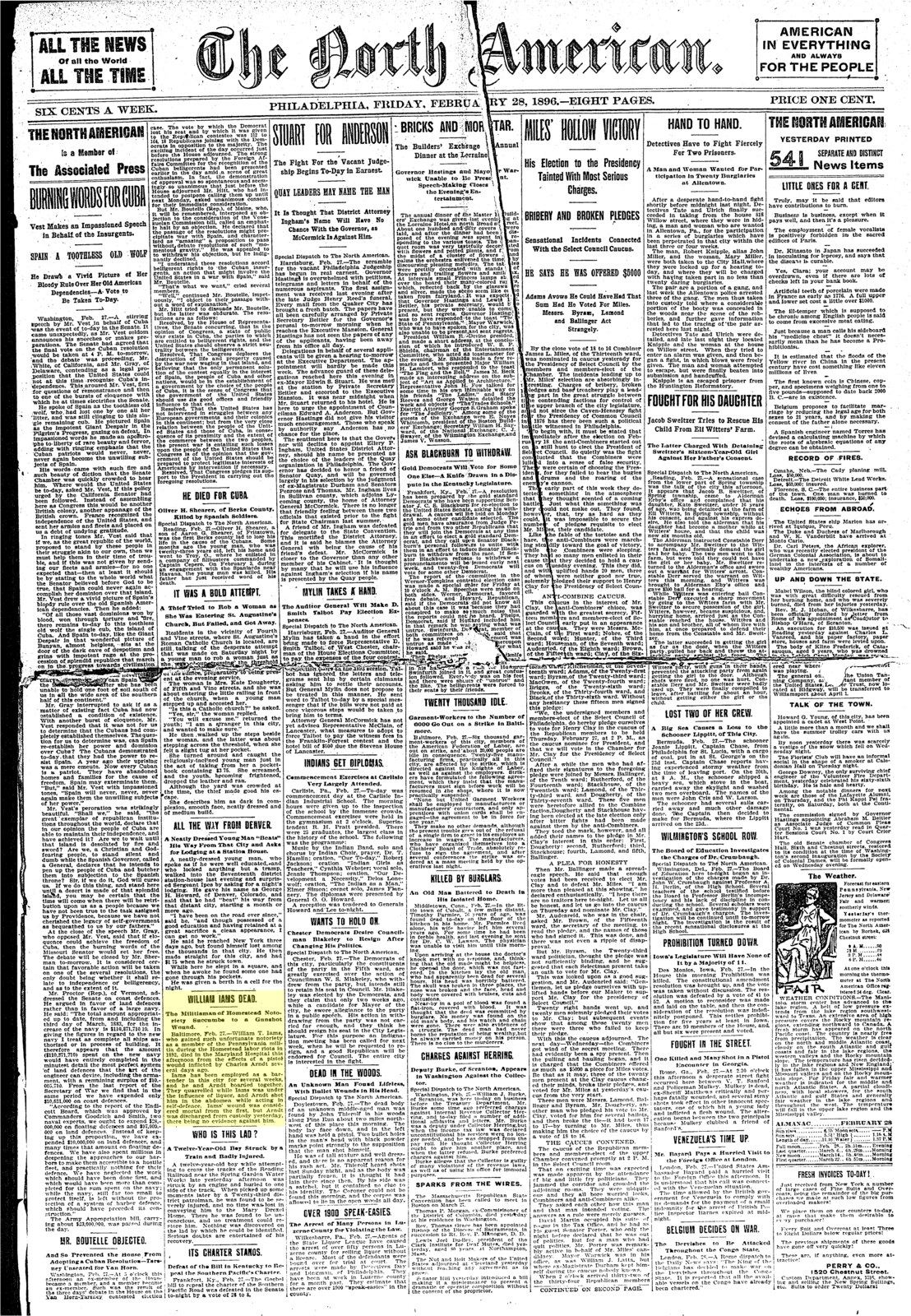
He lingered eight days. The Philadelphia North American of 28 February 1896 carried the obituary, taken from a wire from Baltimore the previous afternoon:
William T. Iams, who gained such unfortunate notoriety as a member of the Pennsylvania militia during the Homestead labor riots in 1892, died in the Maryland Hospital this afternoon from the effects of a pistol wound inflicted by Charles Arndt several days ago. Iams has been employed as a bartender in this city for several weeks, and he and Arndt boarded together. They quarreled while Iams was under the influence of liquor, and Arndt shot him in the abdomen, while acting in self-defense. Iams’s wound was considered mortal from the first, but Arndt was discharged from custody yesterday, there being no evidence against him.19
He was twenty-three years old.
Coda
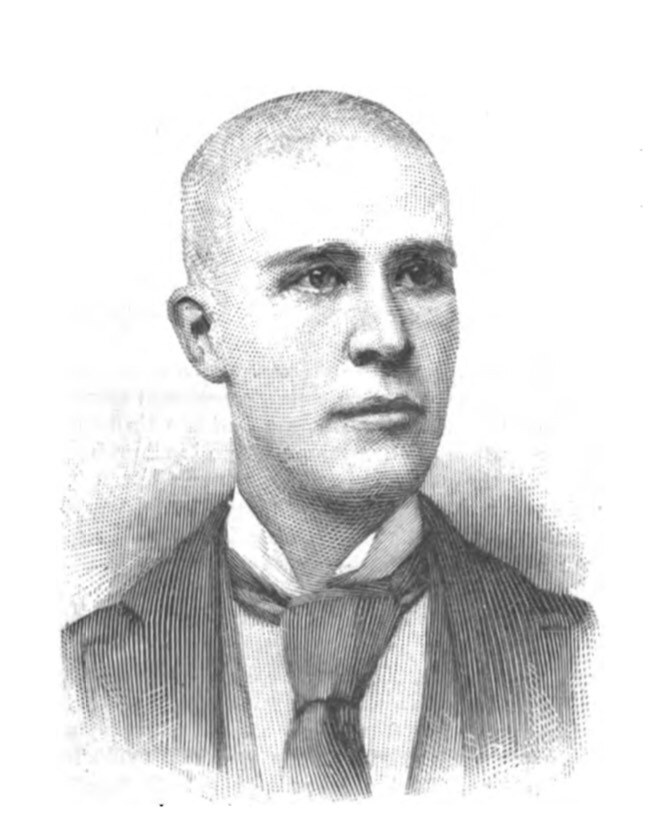
Of the things one wants to know about William, the documents are mostly silent. We do not have his enlistment papers; we do not know what part of his pay he sent home; we do not know whether he ever wrote to his father after the camp at Homestead broke up; we do not know whose name was on the lease at 780 West Saratoga, or how he had come to be tending bar. What we do have is three contemporary likenesses — the Pittsburgh Press engraving of Private Iams before the punishment (Plate 1), the staff photograph of him in his collarless white shirt facing the regiment (the hero of this page), and the Harper’s Weekly portrait of the shaved head taken from the Enquirer’s file two weeks later (Plate 4) — and the dense, day-by-day spine of those two weeks in the summer of 1892, set down in the kind of detail that newspapermen used to lavish on a story they thought their readers might remember for a long time.
The country did not remember him for long. The trial of his officers established the doctrine of “military necessity” that would govern the National Guard’s deployments through the Pullman Strike two years later and the long century of labour disputes after that; William himself slid out of public view inside of four months. Of his younger brother Thomas Mayley Harris Iams’s descendants — the Greene County branch that survived to the present — there is some reason to think that the name William was not used again in the family.
He is buried, the record suggests, in Baltimore. The marker, if there ever was one, has not yet been located.
-
Birth
Father Joseph Martin Iams born
Joseph would become a schoolteacher; the Iams name was already among the oldest in the county.
-
Birth
Mother Sarah Piatt born
-
Birth
Sister Victoria born
Two years before William. Victoria will outlive him by 47 years.
-
Birth
Born in Greene County
Second of four children. Newspaper accounts in 1892 will call him 'a member of one of the oldest families of Greene County.'
-
Birth
Sister Canzada born
The third Iams child; she will die in 1909, thirteen years after William.
-
Birth
Brother Thomas born
Thomas Mayley Harris Iams — ten years William's junior — would outlive him by 59 years and carry the family line forward.
-
Lockout
Workers seize the mill
1 July. Frick locks out the Amalgamated Association of Iron and Steel Workers; the union seizes the Homestead works and posts armed pickets on the riverbank.
-
 Strike
Pinkertons battle strikers
6 July. A twelve-hour gunfight between 300 Pinkerton guards arriving on barges and armed steelworkers leaves seven Pinkertons and nine strikers dead. Governor Pattison calls out the Pennsylvania National Guard.
-
 Assassination
Berkman shoots Frick
23 July. Anarchist Alexander Berkman walks into Henry Clay Frick's office, fires twice, and stabs him three times with a sharpened file. Frick survives.
-
Cheers
Three cheers for the shooter
Hearing the news under a tree in front of his colonel's tent, Private W. L. Iams of Company K shouts: 'Three cheers for the man who shot Frick.' Lt. Col. Streator hears him.
-
Punishment
Strung up by the thumbs
Court-martial within the hour. He refuses to apologize. Hung by the thumbs for 28 minutes until he loses consciousness; half his head shaved.
-
Disgrace
Drummed out of camp
24 July. In a check suit and straw hat, marched at the head of three regiments to the 'Rogues' March' down to Swissvale Station; placed on the Pittsburgh train and told he is barred from voting in Pennsylvania.
-
Father
Father defends his son
5 August. Joseph Iams, interviewed in Grafton: 'He is a brave little fellow.' Expects William to be 'reinstated in his company just to show these upstarts that they don't know it all.'
-
Lawsuit
Officers indicted
23 September. The Allegheny County grand jury indicts Lt. Col. Streator, Col. Hawkins, and Surgeon Grim for aggravated assault and battery — a test case for the National Guard's disciplinary authority.
-
 Verdict
Officers acquitted
5 November. After a week of testimony from generals and surgeons, the jury accepts the defense's case for 'military necessity.' The Guard survives its first major civil challenge.
-
Precedent
Pullman Strike
Two summers later President Cleveland sends federal troops to break the Pullman strike. The doctrine of 'military necessity' established by the Iams trial gets its first major national test.
-
Arrest
Arrested in Baltimore
11 September. Arrested for 'throwing missiles on the street' and forfeits his $3.45 bond. The Baltimore Sun identifies him as 'the man who was triced up by the thumbs at the Homestead riots.'
-
Shooting
Shot in a boarding-house quarrel
19 February. Drunk and combative, William throws Arndt down the stairs; Arndt fetches a revolver and shoots him in the abdomen. Maryland University Hospital says he will probably die.
-
Death
Died at Maryland Hospital
27 February. Eight days after the shooting. Arndt is released — self-defense, no evidence against him. William is twenty-three; the Philadelphia North American calls him 'the militiaman of Homestead notoriety.'
-
Death
Sister Canzada dies
Canzada dies at 31, thirteen years after William.
-
Death
Father dies in Knoxville
Joseph Martin Iams dies at 76, having outlived his namesake by twenty-eight years.
-
Death
Mother dies in Knoxville
Sarah Piatt Iams dies at 87 — forty-one years after William, fifty years after her oldest daughter Victoria becomes the last of the Greene County generation.
Sources
PersonTable, NameTable, and EventTable entries for RIN 8129 (William L. Iams), RIN 847 (Joseph Martin Iams), and RIN 1241 (Sarah Piatt) in the author’s RootsMagic database, Iiams.rmtree. ↩︎
The 1892 Pittsburgh press repeatedly characterized the Iams family of Greene County as “one of the oldest” or “most prominent” in the county; see 3. ↩︎
“AN AWFUL LESSON. Private W. L. Iams’s Terrible Punishment Saturday in Camp; Tortured Until Unconscious; Disgraced and Dishonorably Dismissed From Service; He Was As Guilty As Plucky,” The Pittsburgh Post, 25 July 1892, pp. 1, 4; digital images, Newspapers.com (https://www.newspapers.com/article/163452381 and https://www.newspapers.com/article/163452573 : accessed 19 January 2025), clipped by user dorsey4801. ↩︎ ↩︎ ↩︎ ↩︎ ↩︎ ↩︎ ↩︎ ↩︎
For the standard narrative of the Homestead strike see Arthur G. Burgoyne, Homestead: A Complete History of the Struggle of July, 1892, between the Carnegie Steel Company, Limited, and the Amalgamated Association of Iron and Steel Workers (Pittsburgh: Rawsthorne Engraving & Printing Co., 1893); chapter 13, “Berkman and Iams,” is the contemporary book-length account of both the assassination attempt and William’s punishment. ↩︎
For Berkman’s own account see Alexander Berkman, Prison Memoirs of an Anarchist (New York: Mother Earth Publishing Association, 1912), chapters 1–3. The Allegheny police photograph of 24 July 1892 is in the Library of Congress, LC-USZ62-91738. ↩︎
“PRIVATE IAMS TALKS. He Says Col. Streator Had a Standing Grudge Against Him,” The Pittsburgh Press, 26 July 1892; digital images, Newspapers.com. ↩︎ ↩︎
“HUNG UP. By the Thumbs For Cheering Frick’s Assassin — Terrible Torture Inflicted Upon a Soldier,” The Cincinnati Enquirer, 25 July 1892, special dispatch from Pittsburgh, dated 24 July; digital images, Newspapers.com. ↩︎
Pittsburgh Commercial Gazette, 5 August 1892; digital images, Newspapers.com. ↩︎
“THE TRUTH ABOUT IAMS,” Chicago Tribune, reprinted in the Pittsburgh Commercial Gazette, 6 August 1892; digital images, Newspapers.com. ↩︎
“SNOWDEN SPEAKS. His First Public Utterance Regarding Homestead Affairs — A Condition of War — When He Entered the Town It Was in a State of Revolution — Civil Authority Subverted — Ijams Was Guilty of Treason in Time of Actual Revolution,” Pittsburgh Commercial Gazette, 30 July 1892; digital images, Newspapers.com. Includes the Washington Observer interview with Lt. Col. Streator at his home in Washington, Pa., and the statement of Lt. Col. Cullinan. ↩︎ ↩︎
“IAMS HAS AN ATTORNEY. Who Will Endeavor to Learn Why the Private Was Punished Without a Trial,” Pittsburgh Dispatch, 27 July 1892; digital images, Newspapers.com. ↩︎
“Iams’ Attorneys Meet a Stumbling Block,” Harrisburg Patriot, 30 July 1892, special dispatch from Pittsburgh dated 29 July; digital images, Newspapers.com. The section relied on by the defence was § 27 of the Pennsylvania National Guard Act of 1887, which barred civil process against any officer “while engaged in such service or for thirty days after.” ↩︎
“N. G. OFFICERS’ POWER To Punish Insubordination in the Ranks to Be Tested — Private Iams’ Judges Indicted,” Pittsburgh Dispatch, 23 September 1892; digital images, Newspapers.com. The indictment was returned against Streator, Hawkins, and Grim of the Tenth Regiment for aggravated assault and battery. ↩︎
“THIS WILL END THE AGONY. Winding Up of the Long Drawn Out Iams Case; The Defense Argues Not Guilty; Dr. Ullum Says He Would Have Hunted With a Gun,” The Pittsburgh Post, 4 November 1892, p. 3; digital images, Newspapers.com (https://www.newspapers.com/article/140595886 : accessed 11 December 2024), clipped by user bauerlez. ↩︎ ↩︎
“THE IAMS VERDICT,” Pittsburgh Dispatch, 6 November 1892; digital images, Newspapers.com. The acquittal was returned by the jury on the evening of 5 November. ↩︎ ↩︎
“WM. L. IJAMS ARRESTED. The Man Who Was Triced Up by the Thumbs at the Homestead Riots,” The Baltimore Sun, 11 September 1895, p. 8; digital images, Newspapers.com (https://www.newspapers.com/article/138563520 : accessed 17 January 2025), clipped by user michaeld8591. ↩︎
William L. Iams residence at 780 West Saratoga Street, Baltimore, ca. 1896, is supplied by the Washington Evening Times shooting account; the address is not yet confirmed in the 1895/96 Baltimore city directory. ↩︎
“PRIVATE IJAMS SHOT. During Homestead Riots He Was Strung Up by the Thumbs,” Washington Evening Times, 19 February 1896; digital images, Newspapers.com. The wire dispatch is dated Baltimore, 19 February. ↩︎
“WILLIAM IAMS DEAD. The Militiaman of Homestead Notoriety Succumbs to a Gunshot Wound,” The Philadelphia North American, 28 February 1896; digital images, Newspapers.com. Wire dispatch dated Baltimore, 27 February. The variation in the given names across the wire reports — “William H. Ijams,” “William T. Iams” — is typical of late-19th-century telegraphed copy and reflects neither a settled middle name nor a doubt about identity; the Baltimore Sun arrest record of September 1895 uses “Wm. L. Iams,” matching the RootsMagic record. ↩︎